
Throughout history, there have been many grand empires that laid the foundations of ancient civilizations. The Mughal Empire, founded in the sixteenth century, was among the richest and most extensive. Its grandeur is still reflected in the cities that the Mughals had created. Among those cities, Delhi – also known as Shahjahanabad – continues to exemplify the splendor associated with the word Mughal. Shahjahanabad came into being when the Mughal Empire was at its height.
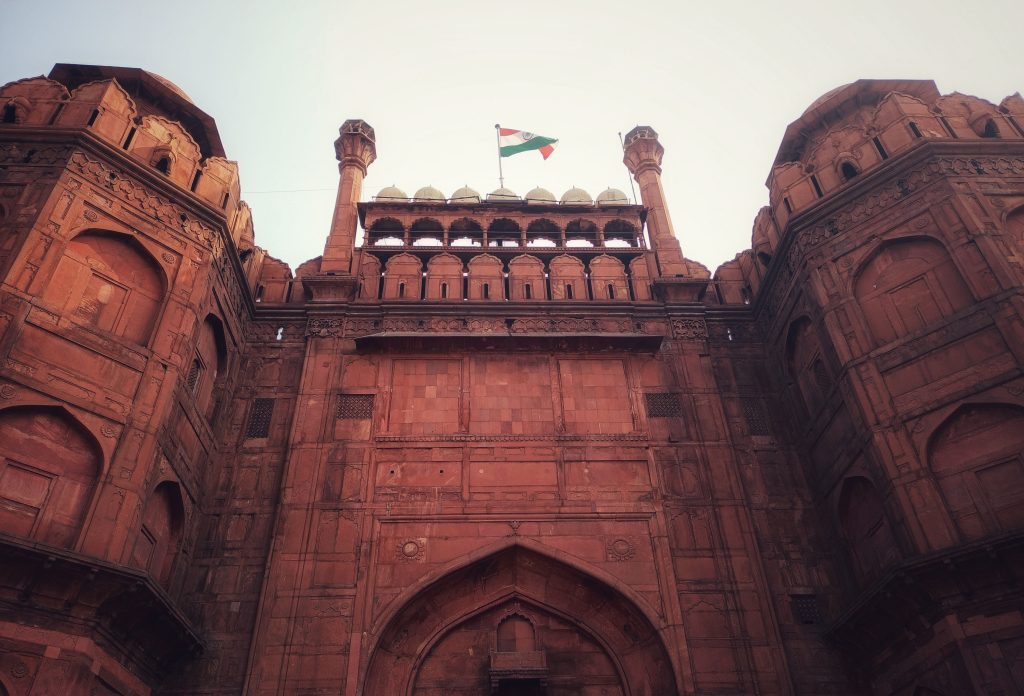
Many historians believe that since the beginning, constructions of cities, forts, palaces etc was a statement of power and authority by the kings. In the old times, kings tried to leave their mark on history by building grand cities and buildings. Shah Jahan’s father and grandfather had been patrons of all arts. But Shah Jahan’s personal focus was on architecture and the Taj Mahal is a prime example of his obsession. He commissioned the construction of the Red Fort when he decided to shift his capital from Agra to Delhi; its design is credited to architect Ustad Ahmad Lahori, who also built the Taj Mahal. The Red Fort was a symbol of Shah Jahan’s power.
In 2020, when we don’t have the old monarchical system anymore, the fort is still the site of India’s annual Independence Day celebrations, when the Prime Minister speaks from the Red Fort; the past and present merge as we see the fort standing in its glory.


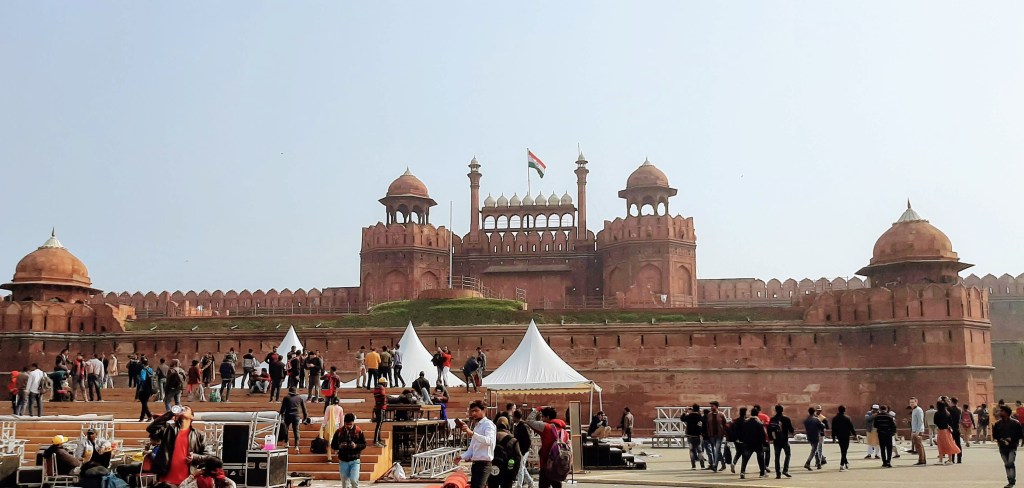
The encircling wall of the Fort was pierced by two imposing gateways. One of these is located to the west and was called Lahori Darwaza (now Lahori Gate) because it opened in the direction of Lahore. The other major entrance was to the south and was known as Dilli Darwaza or Akbarabadi Darwaza because it opened in the southern direction, facing the cities of Delhi as well as Akbarabad (which was the Mughal name of Agra).

Lahori Gate is the main entrance to the Red Fort. The gateway consists of three storeys, each decorated with rectangular, cusped arched panels. These are flanked by semi-octagonal towers crowned by two open octagonal pavilions. The whole gate is clad in red sandstone, except the roofs of the pavilions, where the white stone is used. Between the two pavilions is a screen of miniature chhatris having seven miniature marble domes. Around the whole wall, there are flame-shaped battlements.
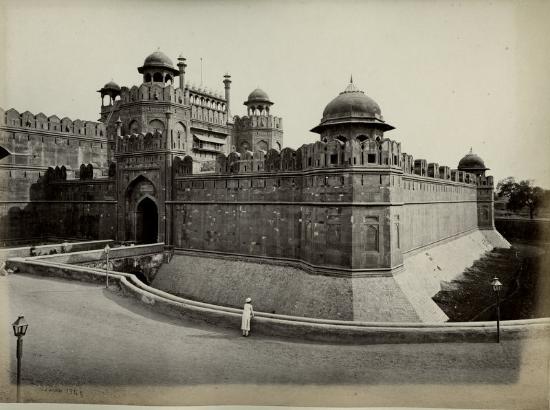
Lahori Gate – Red Fort Archives 
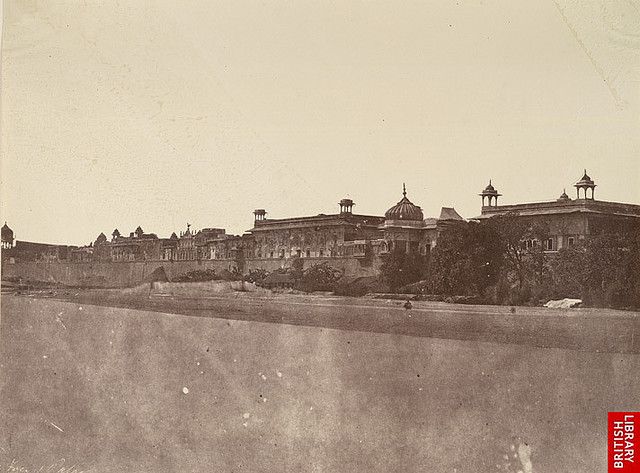
Eastern Face of the Red Fort 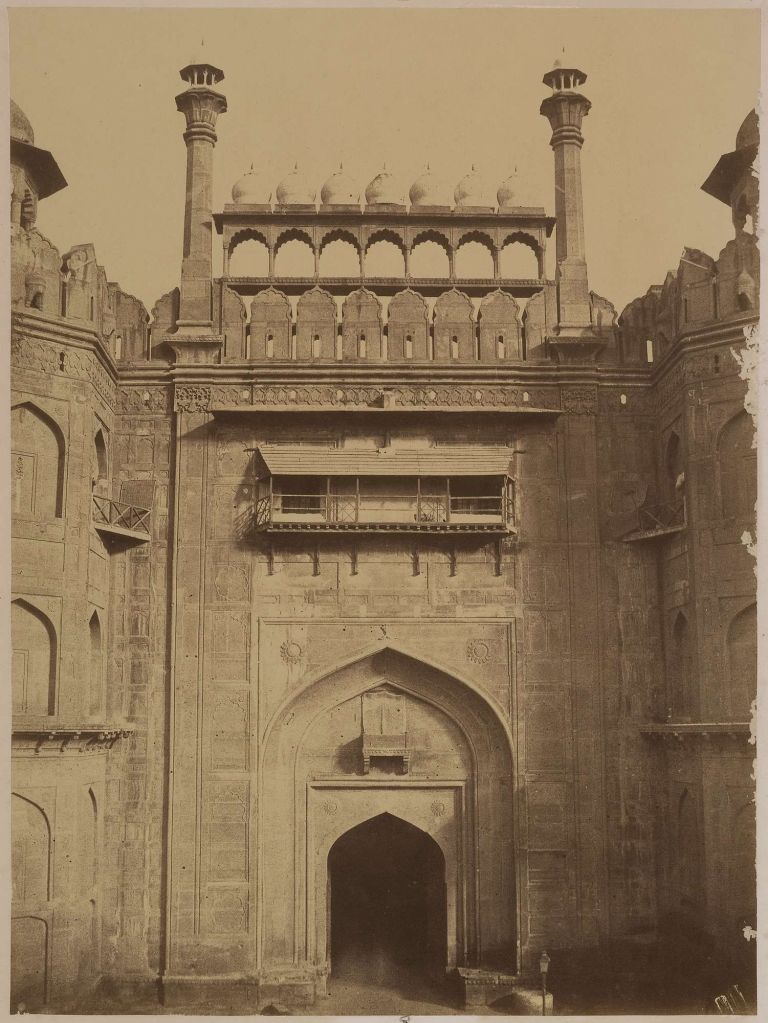
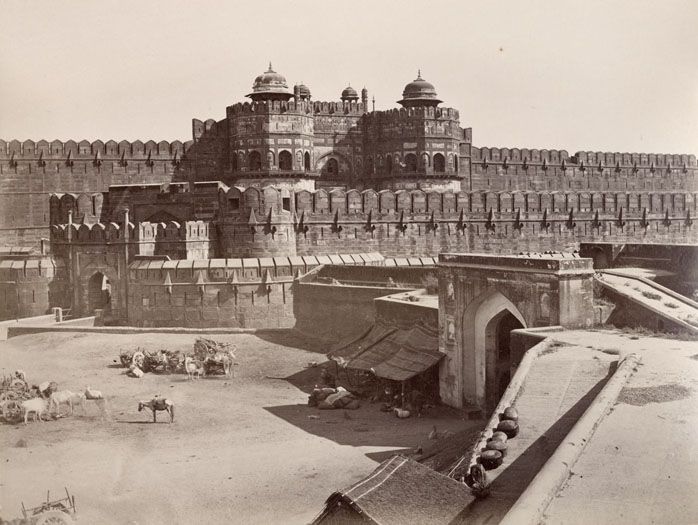
Gateway to the Red Fort 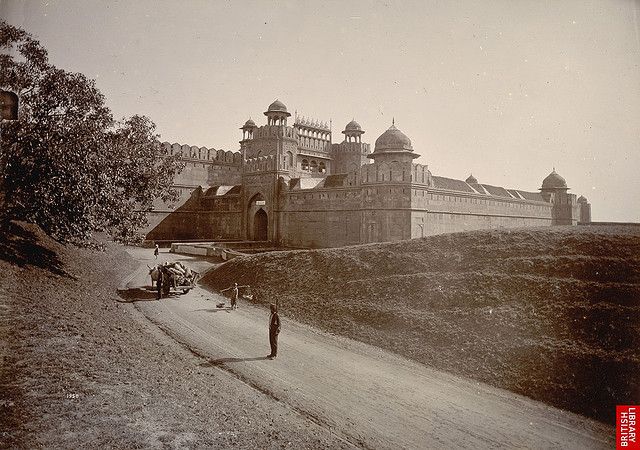
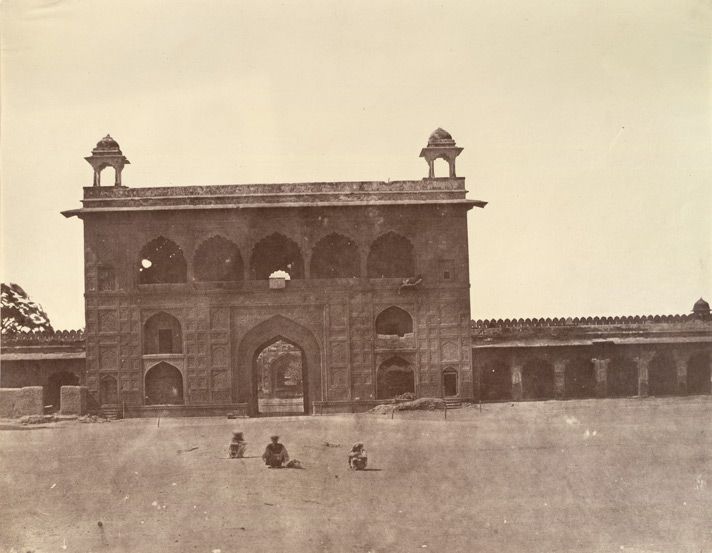
Naqqar Khana (Drum House) 1858 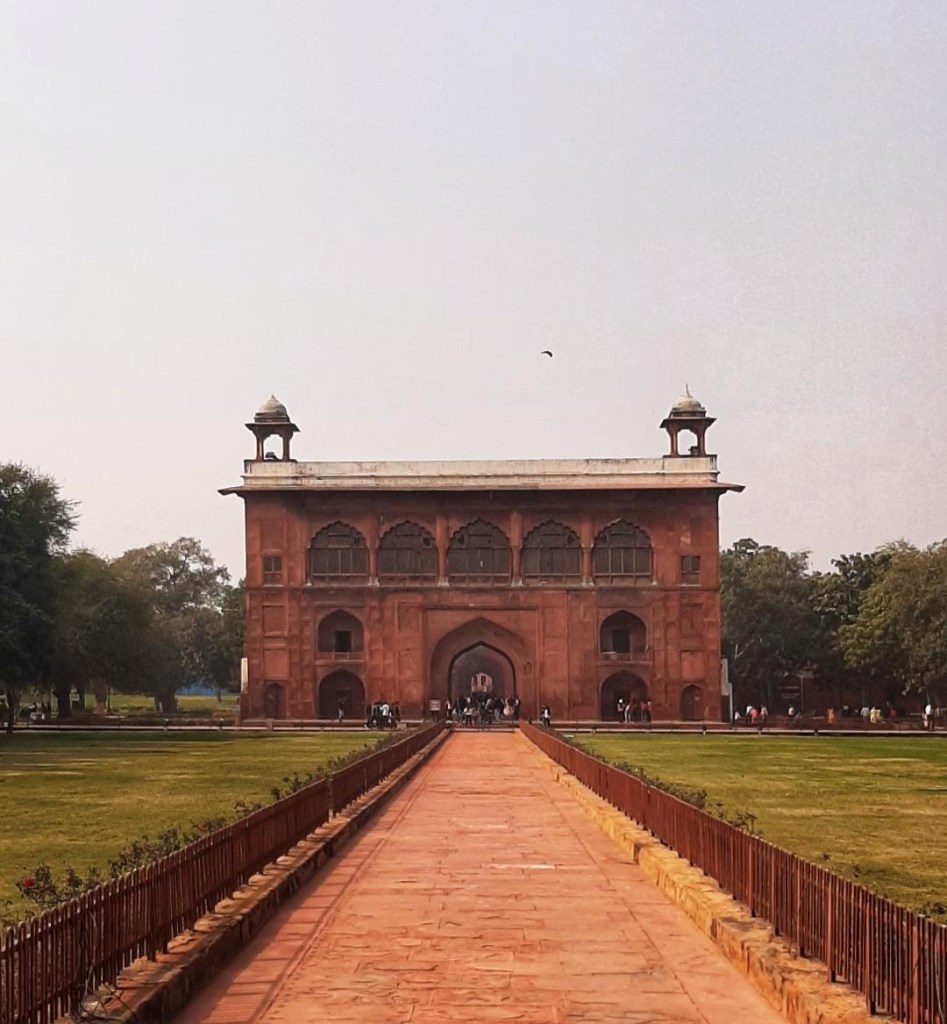
Naqqar Khana (Drum House) 2020
Image source for old pictures : Google & British Library
Compiled by Ananya Tyagi & Pari Jain
 Rediscovering Delhi
Great post 😁
LikeLiked by 1 person
Thank you. We will be adding a lot of information about different monuments and places in Delhi over the next few weeks. Hope you like those too.
LikeLike