
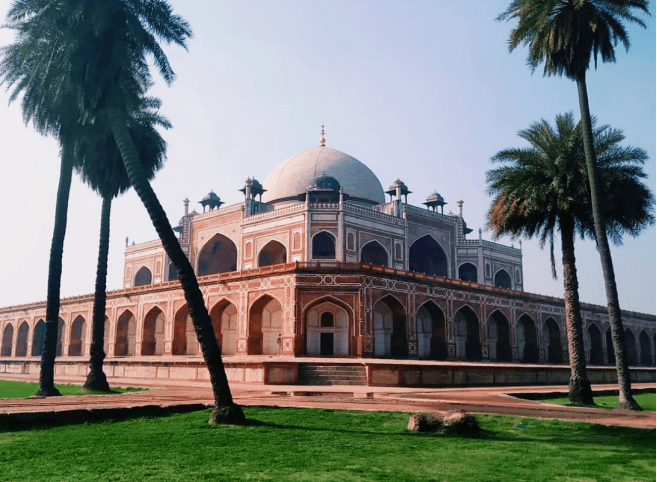
“Death has nothing to do with going away. The sun sets. The moon sets. But they are not gone. Death is a coming together.” – Jalāl ad-Dīn Muhammad Rūmī

The fact which inspired us to select Humayun’s Tomb in the first place was that it is the earliest example of Mughal architecture in India and is known to have inspired the construction of the Taj Mahal. Bega Begum (also known as Haji Begum) came up with the plan of building the mausoleum for her beloved Humayun in 1565. The tomb is influenced by Persian architecture, as the architect Mirak Mirza Ghiyas was of Persian origins.
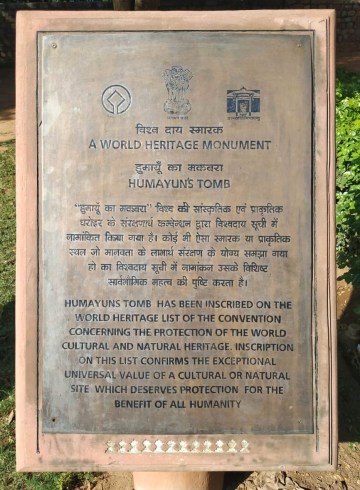
The information boards installed at the entrance of the monument states that Humayun’s Tomb is a world heritage site.
Humayun’s Tomb is a major attraction for tourists, including those from USA, Japan and Israel.

The boundary walls of Humayun’s Tomb were made of limestone and jaggery water, which constantly require moisture, hence the monument had been constructed near the Yamuna River.
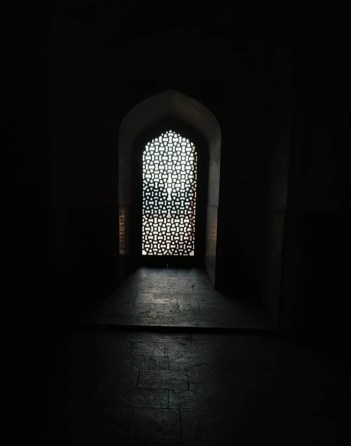
Before reaching to the main site that is, the maqbara or the tomb, there is a small museum-cum-gallery which informs the tourists about the procedure involved in erecting the monument and its recent renovation. It has pictorial representations, artefacts and written descriptions of the different stages of restoring various parts of the monument.
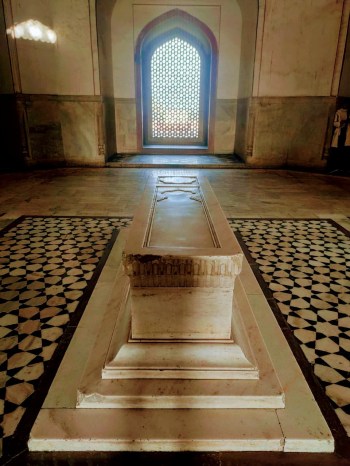
The making of the lattice work is depicted through various stages; starting with raw stone, stones with designs drawn on it, semi-carved and then, fully carved; all of them placed next to each other. The latticework while providing ventilation and light, also adds to the beauty of the monument.
Bara Dwari
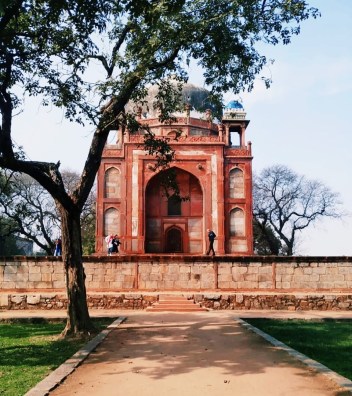
Bara Dwari is a white coloured four walled enclosed structure with twelve doorways. It consists of an underground tunnel that connects the banks of the Yamuna to the monument. It facilitated quick transportation of water for construction needs as well as the red sandstone from Rajasthan.
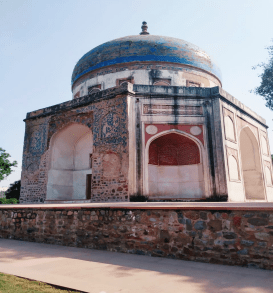
To the southeast, there are two structures. The Nai ka Gumbad (as the name suggests, it was built for Humayun’s barber); and The Neela Gumbad, that lie outside the complex
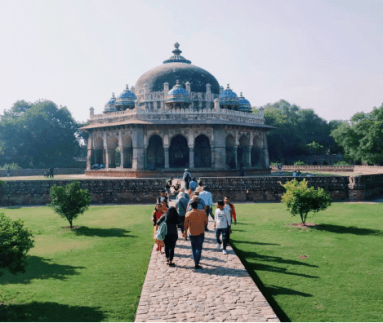
The tomb of Isa Khan Niazi, who was a noble at the courts of Sher Shah Suri and Islam Shah Suri, is situated to the south of Bu Halima’s Garden in the Humayun’s Tomb complex.
It has been over 400 years since this jewel of Mughal architecture was completed; it pre-dates the Taj Mahal. The restoration of the monument was undertaken by the Aga Khan trust between 2000 and 2003, The Aga Khan Trust for Culture funded and collaborated with the Archaeological Survey of India to revitalise the monument. ‘Rediscovering Delhi’ project was a worthwhile experience. It demanded shedding of existing beliefs, assumptions and myths and accepting facts with an open mind. It is fascinating how the desire of a wife to express her love for her dead husband led to this magnificent structure. We are gratified to have an opportunity to be a part of this project- ‘Rediscovering Delhi”
Report by – Kanchi Shridhar, Sarang Naini and Samridhi
English (Hons), I Year
 Rediscovering Delhi