
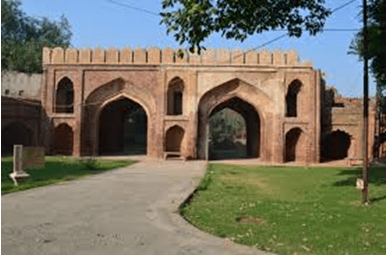
Guardians of City: The Gates of Old Delhi
From the 8th to the 20th century, the gateways around the city of Delhi were built to safeguard the city from invasions. Initially,there were 14 gates that were built by the Mughals. But during and after the Revolt of 1857, almost all the gates were demolishedby mutineers and the British.
One of these gateways is the Kashmiri Gate, which was built by the founder of Shahjahanabad, mostly known as Purani or Old Delhi, the Mughal emperor Shah Jahan, in mid-17th century in the northern direction to indicate the way toward Kashmir. It’slocation near the Yamuna River resulted in the planting ofgardens, mosques and palaces at the orders of the royal family. Some of such attractions were the Qudsia Bagh, a Mughal garden commissioned by Qudsia Begum. Fahkr-ul-Masjid was built in the memory of Shujaat Khan by his wife Kaniz-i-Fatima and a palace was built for the eldest son of Shah Jahan, Dara Shikoh. After the East India Company took political control of Delhi, Colonel James Skinner built Delhi’s first church, St. James, in 1836. Houses, compounds for storing gunpowder and ammunition and burial grounds were built for the British and Christian populace.
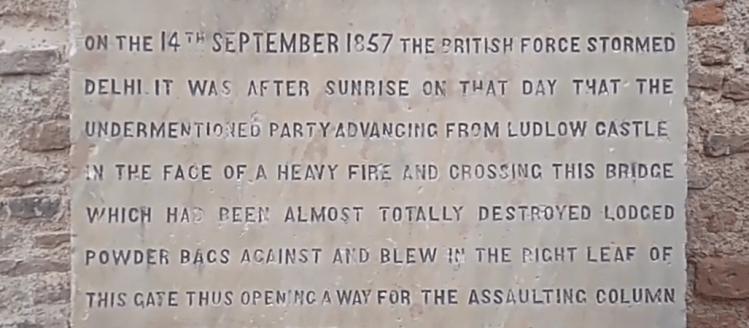
During the Revolt of 1857, due to steady bombardment by the British troops, Kashmiri Gate was left in a ruined state. Later, colleges, post offices and markets were established nearKashmiri gate, alongside the British residential area, Civil Lines. The Old Delhi Railway Station was constructed to connect Delhito Kanpur, Calcutta and Allahabad in 1864.

After the independence, the area surrounding Kashmiri Gate saw the coming of the Inter State Bus Terminal (ISBT) which is thebiggest ISBT in India. And in 2002, Kashmiri Gate Metro Station was built which is the biggest Metro station and also hasthe only tri–junction of Delhi Metro.
Daulat Ram and Sons, a machine company, is right opposite the metro station. Old architectural masterpieces can be seen on a walk through the Lothian Road. Dara Shikoh’s Library is now a part of the Indraprastha University campus and is an archaeological museum. Yuvak Ramlila Community, near the St. James Church, is a host for the annual Dussehra festivities. Abuilding nearby was built over a century ago and now has many banks and shops operating from there. There is also an automobile market starting from Lothian Road with thousands of automobile shops.
The place still retains the grandeur of the past, whilst making way for modernity.
~Submitted by Chiranshi Yadav
 Rediscovering Delhi