
This is part 2 of the Article series on The Qutub Complex. Read the first part at The Qutub Complex – Part I.
QUWWAT-UL-ISLAM MOSQUE (1192-1198 A.D.)
Quwwat-ul-Islam (“The might of Islam”) Masjid is known to be the oldest masjid ever in India. Its construction was started by Qutubuddin Aibek in 1192 A.D. According to a local story, the Masjid was built by demolishing 27 Hindu and Jain temples, which signified the victory of Islam over Hindus in the Indian subcontinent. Behind the ruined gates of the Mosque, one can still see the rubble and rough fragments of those temples which were demolished. Some pillars still lay intact, behind the mosque and add to the cultural blend of the area.
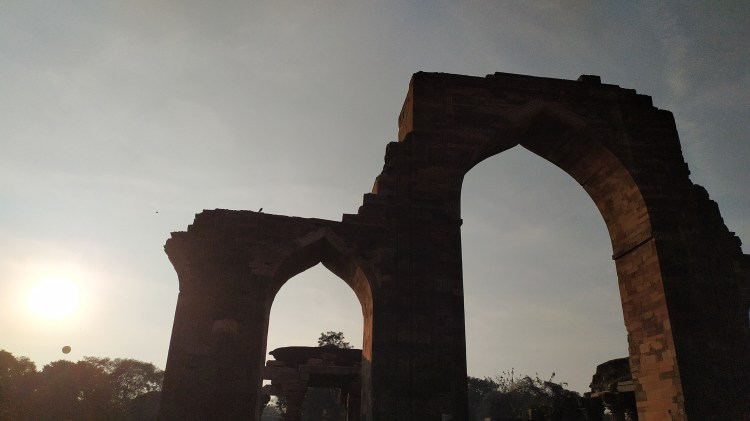
This area is mostly covered with ruins and demolished remnants of the buildings of the earlier period. The lush green lawns, landscaped gardens and the clutter of ruins lend the complex an aura of decay, which increases as the sun sets and the shadows of the timeless buildings lengthen.


THE TOMB OF ALAUDDIN KHILJI AND HIS MADARSA

Located at the south-west of the Quwwat-ul-Islam Mosque, the Madrasa was built by Alauddin Khilji in 1315 A.D. The Madrasa is a center where religious education is provided to students. Alauddin Khilji’s tomb is a rare instance of madrasa-tomb combination. A man from Kashmir who had come to visit Delhi said that the Madrasa closed down after the Khilji reign because people believed that it was not appropriate to study the Quran next to the grave of a king. However, the argument appears to hold little water as there are many instances of madrasa-tomb combination made by Afghans in other parts of the world.

THE MUGHAL MOSQUE

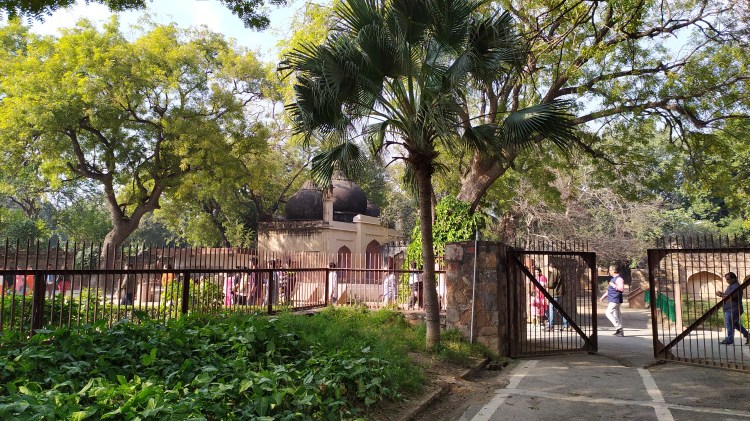
Constructed during the Mughal period, the Mughal mosque of the Qutub Complex is the first building that one encounters after entering the complex. The monument functions, as people still come here to offer their prayers. The monument is well maintained as regular restoration work is done here. The mosque has three prayer halls, each with cusped arches. The dome is onion shaped; this structure was very popular during the Mughal era. One can observe people meeting and praying in the mosque. This place is not visited by the tourists and is side-lined by the Qutub Tower.
The place has a completely different vibe, which is in contrast to the rest of the monuments. The Qutub Minar was a symbol of triumph and superiority; today it is a part of the cultural heritage of our country. The place is exceptionally peaceful and mesmerizing.
TOMB OF IMAM ZAMIN (1537-38 A.D. , early Mughal period)
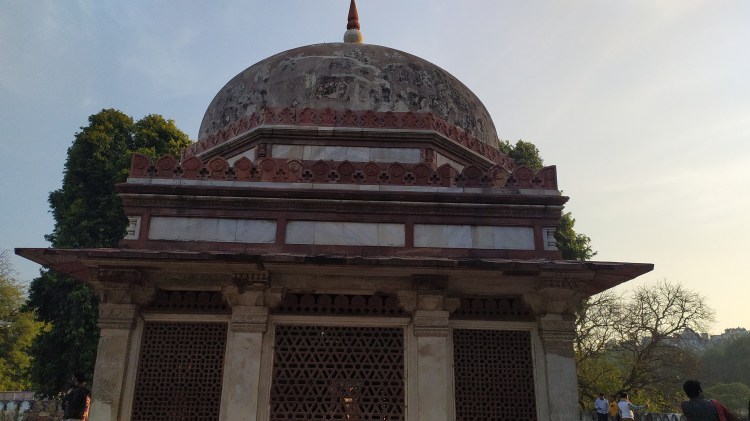
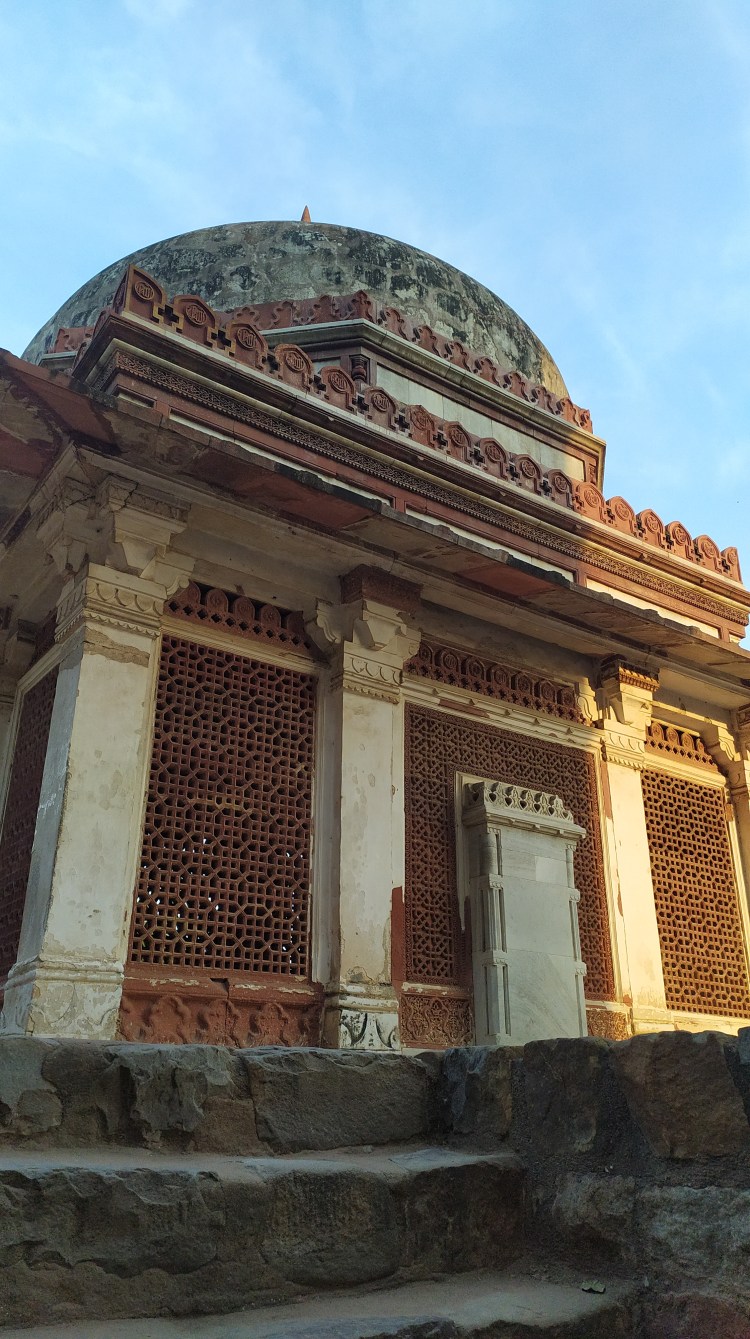
The tomb of Imam Zamin is situated to the east of the Alai Darwaza. The tomb is dedicated to Mohammed Ali (Imam Zamin), an Islamic preacher from Turkestan. It was constructed during the early Mughal period and hence, resembles Lodhi architectural style. There is a marble cenotaph situated at the very centre of the tomb and a Mihrab at the west, indicating the direction of the Kaaba in Mecca. The walls of the tomb are decorated with jaali structures. The dome of the tomb has octagonal design and is ornamented with layers of kanguras (battlement motifs) below it.
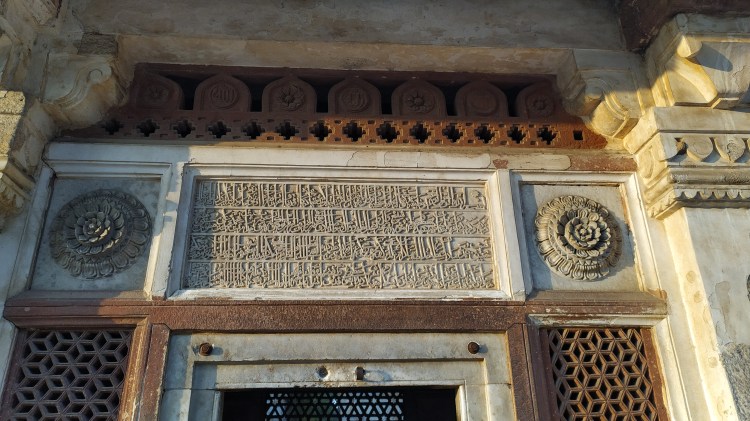
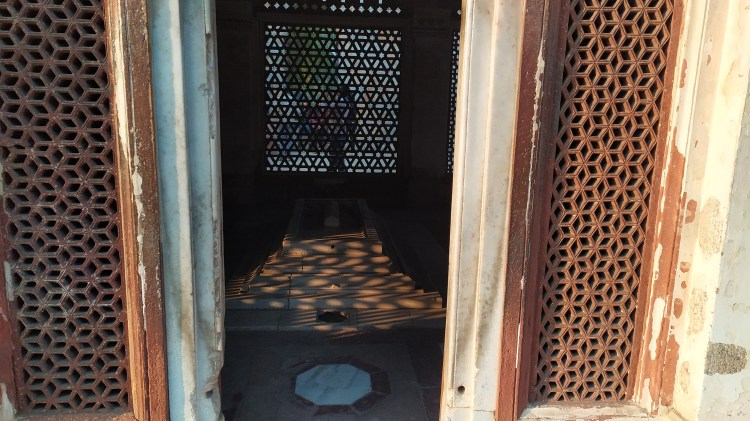
OTHER PROMINENT ARCHITECTURAL FEATURES:
SMITH’S CUPOLA
Firoz shah Tughlaq, the third ruler of the Tughlaq dynasty, added two more storeys with a cupola to the already existing three storeys of the Qutab Minar. A cupola is a structure crowning the top of a tower or a building. In 1802, the cupola got damaged due to an earthquake. Robert Smith replaced it with a completely different cupola, which was later removed and placed in its present location because it could not match the style of the Minaret.
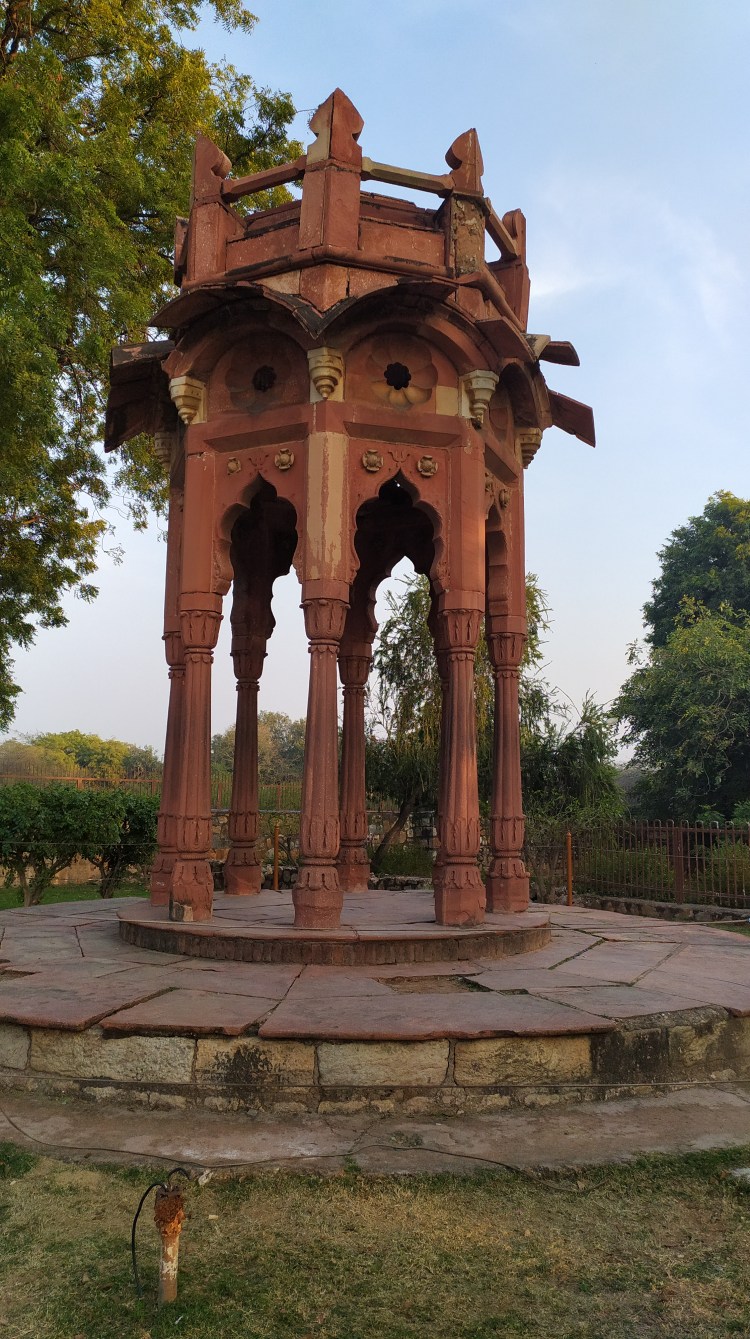
Misinformation seems to prevail on religious and historical fronts despite several information plaques placed by the tourism authorities adjacent to each monument. A man was heard referring to the structure, incorrectly, as a broken storey of the Minaret which fell due to lighting.
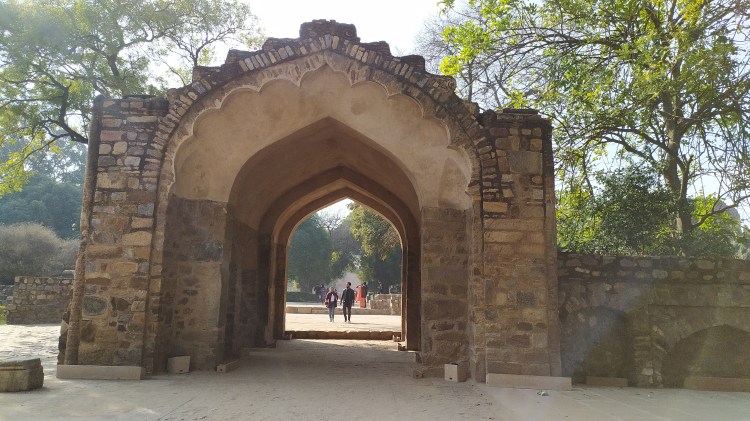
THE MUGHAL SARAI

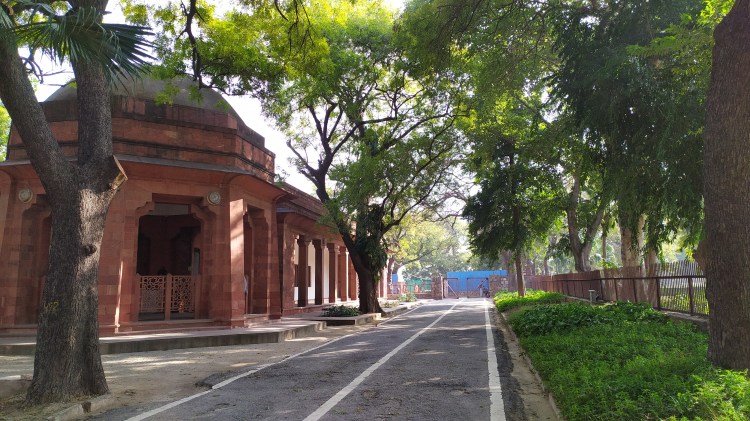
One of the eye-catching features were the frequent use of pishtaqs (arched rectangular vaulted walls) all over the complex. The pishtaqs served both decorative and functional roles. A group of local Muslims told that pishtaqs were used for putting Mashaals (flambeau) or were used as shelves and almirahs.


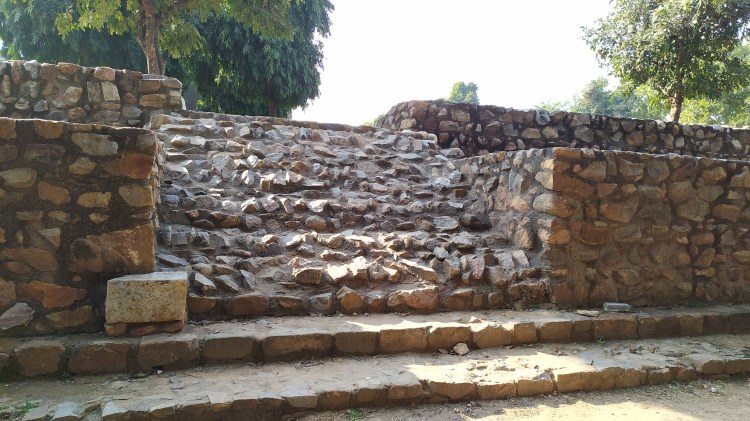
This structure is a part of extension by Alauddin Khilji. Most probably the structure represents the shape of chadar. A chadar is prominent feature of the Islamic architecture. The stone slope acted like a bed for water channel so that water flows from a higher level to lower level.
TRIVIA BOX/ POPULAR CULTURE
- The Qutub Fest of Indian Classical dance and music takes place every year in November.
- Gordon Sanderson, was the landscape designer of the Qutub complex as we see it today. In 1913, he was assigned with the task of conserving clusters of the monuments of the Qutub complex. Sanderson’s sundial was installed at the Qutub complex for his exemplary contribution to the archaeological survey of India.
- The Qutub Minar complex has also been a part some Bollywood songs like “Dil ka Bhanwar kare Punkar” from the movie Tere ghar ke samne (1963) and song “Chand Sifarish” from the movie Fanaa (2006).
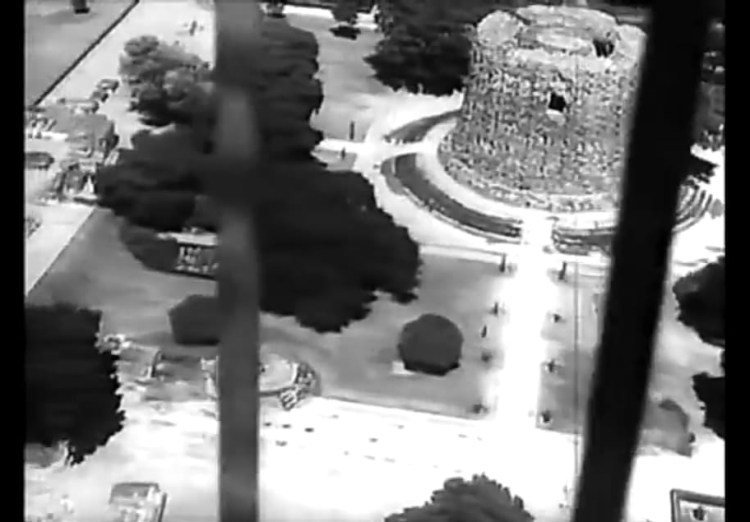
- Qutub Minar has survived many accidents in the past, and studies have proved that the low-flying aircrafts produce vibrations and is a serious threat to the monument, which may result in its tilting in the future.
Compiled by: Nandini Lohia, Ridhima Gandhi and Akansha Bharali
 Rediscovering Delhi
This blog is simply beautiful. The excellent pictures and the very very easy to read interesting narrative make it delightful.
I truly enjoyed it and am so proud of the whole team.
LikeLiked by 1 person