
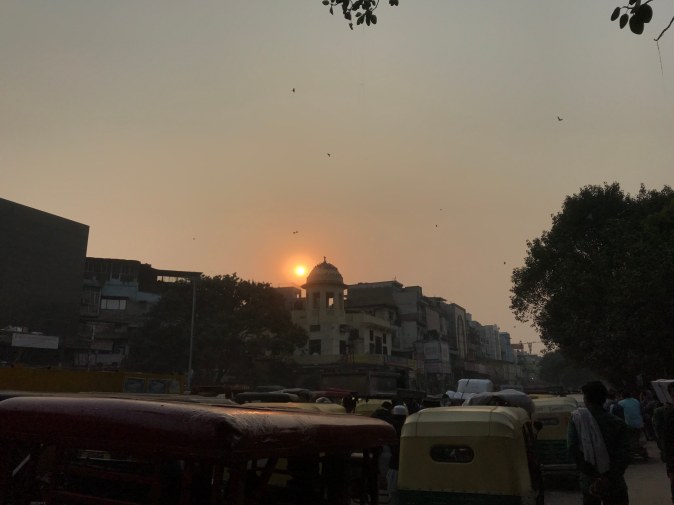
Rediscovery of Delhi would have been incomplete if the very heart of this city hadn’t have been included. Therefore, I focused on the places that have almost passed into oblivion over the years – Chandni Chowk, the heart of Delhi, and its Sarais – which I will bring to light through this project.
In order to have a more spontaneous experience, we refrained from using any internet sources and asked the locals what they know about the Sarais; the stories they have heard and what the Sarais are like today.
The Badi Mor Sarai, Chhoti Mor Sarai, Sarai Top Khana and Begum ki Sarai are the few which they mentioned. The first three of these were easy to locate but the Begum ki Sarai was like a holy grail to us, about which I had read a lot, but knew nothing. Jahanara, the beloved daughter of Shah Jahan, had designed and commissioned the construction of this Sarai for rich travellers and merchants. Although some information was available, it was almost impossible to locate it.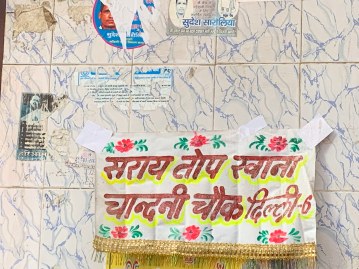
The compulsion to locate this Sarai in the midst the hustle-bustle of a dusty market, drove me to the edge of a madness and took me to every nook of Chandni Chowk. Alas, I couldn’t locate it, and had to settle for the information available.Going back to the first place I visited, Badi Mor Sarai, which now is turned into a railway colony for officers: people living here do not know much.
The rediscovery of Delhi would have been incomplete if the very heart of this city hadn’t have been included. Therefore, I focused on the places that have almost passed into oblivion over the years – Chandni Chowk, the heart of Delhi, and its Sarais – which I will bring to light through this project.
In order to have a more spontaneous experience, we refrained from using any internet sources and asked the locals what they know about the Sarais; the stories they have heard and what the Sarais are like today.
The Badi Mor Sarai, Chhoti Mor Sarai, Sarai Top Khana and Begum ki Sarai are the few which they mentioned. The first three of these were easy to locate but the Begum ki Sarai was like a holy grail to us, about which I had read a lot, but knew nothing.
Jahanara, the beloved daughter of Shah Jahan, had designed and commissioned the construction of this Sarai for rich travellers and merchants. Although some information was available, it was almost impossible to locate it.

The compulsion to locate this Sarai in the midst the hustle-bustle of a dusty market, drove me to the edge of a madness and took me to every nook of Chandni Chowk. Alas, I couldn’t locate it, and had to settle for the information available.
Going back to the first place I visited, Badi Mor Sarai, which now is turned into a railway colony for officers: people living here do not know much about its history. All that we could gather from some old men was that this place was turned into a residential complex for railway employees by the British, though its architecture still emanates an old Mughal vibe.
 On the other hand, Sarai Tope Khana had a rather better known history. According to people living here, this Sarai was constructed to store ammunition, and to accommodate the Mughal topchis (the artillery men). The people now inhabiting this place claim to be the descendants of those topchis. While locating these Sarais, I came across many famous sites, like the Fatehpuri Masjid (named after Fatehpuri Begum, who funded and commissioned the construction of this mosque); Sisganj Gurudwara; the Town Hall; Chaina Ram (the famous Sindhi sweets shop); Chaina Ram (the famous Sindhi sweets shop); Natraj Bhalla shop are just a few famous names.
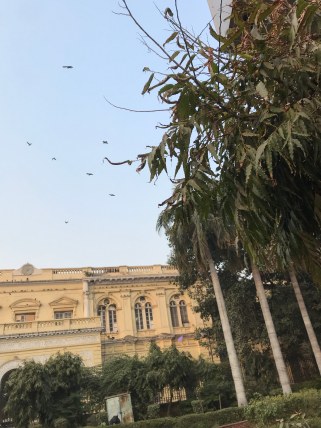
The trip was quite a success, but the only thing which was unsatisfactory was our inability to locate Begum ki Sarai. As a last resort, we enquired about this from a priest of the Fatehpuri Masjid. He said that many such places are named and renamed again and again, which makes it very difficult to locate them. We finally tried to map the location of the Sarai from the historic records of map of Chandni Chowk, and learned that it was in a place we had already been to. The Town Hall!! which was built post the mutiny of 1857 after demolishing the Sarai. On a brighter note, we came to know that the gardens surrounding it are still the same.
At last, thankfully, I found my holy grail; on second thoughts, I actually rediscovered it.
 After this rendezvous, many questions haunted my mind; “what were the sarais like in those times and how they have changed?” “Is the sarai culture still alive in the Delhi?” “Has the Archaeological Survey of India undertaken any preservation or restoration work for these sarais?” “What kind of travellers do these sarais attract nowadays, and what kind of clientele did they have in the Mughal times?”
In order to answer these questions, we will have to look not just at the architectural/physical aspect associated with these magnificent structures, but the abstract/intangible aspects too. To my understanding, when a structure is built, a lot goes into it than just stones, concrete, iron, machinery and craftsmanship.
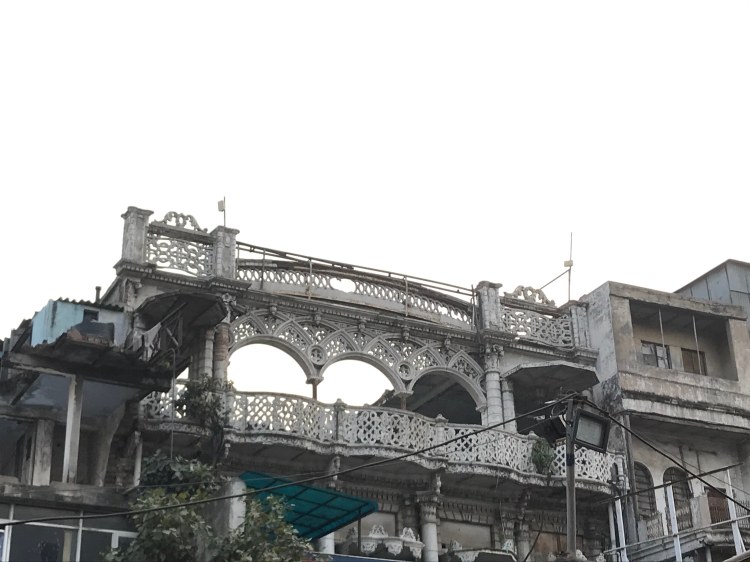 Considering this point, these sarais as per my little research, some of these structures were places of luxury, abundance, extravagance. These sarais could be considered the equivalents of high end luxury hotels of today. To substantiate this point, a momentous event such as the coronation of Aurangzeb took place in the Bagh Aizzabad / Shalimar which had the complex of a sarai built by Akbarabadi Begum. The grand Begum ki Sara,i built by Jahanara, had precious stones engraved in its walls, it is claimed. Thus it is pretty obvious that some of these sarais were meant for the people with wealth and status.
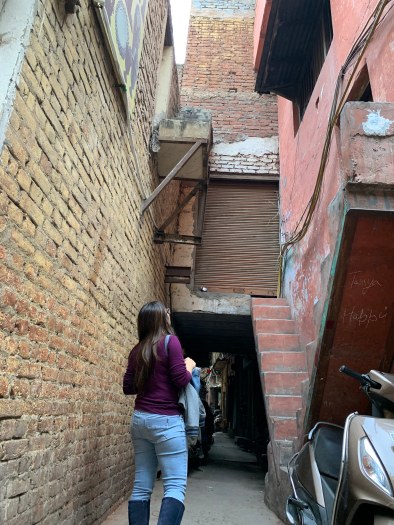
On my exploratory walk in the crowded streets of “Shahjahanabad,” I couldn’t find traces of the magnificence; the streets were claustrophobic and packed; the balconies of the buildings were overarching the roads leaving no airspace for sunlight to enter. Nothing of the ancient ethereal architecture could be seen. Those sarais are gone; the culture is lost; the magnificent architecture has nothing of its former grandeur left. These buildings are like the dying embers of a winter fire, wanting and waiting to be reignited. This was disheartening. The reason for such a loss for a city as great as Shahjahanabad, could be the constant invasions that this city has faced. Delhi had always been a city of riches (at times, it was compared to the ancient Rome) and thus it attracted MANY plunderers and conquerors. It is because of this constant mixing of cultures that the original beauty of the city has been lost over time. Delhi has overtime become a “Bemel Khichdi”.
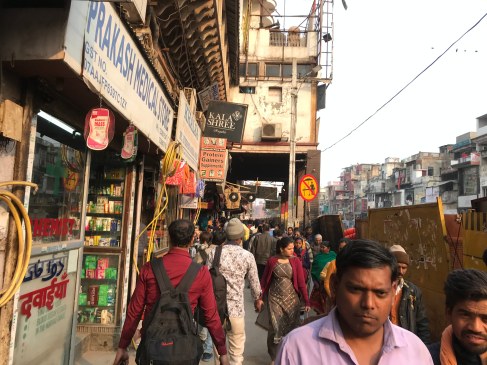 Maybe this mixture is the very essence of Delhi; maybe this city’s very identity is its diversity and complexity. Still that doesn’t justify or provides any solace for what we have already lost. But like a typical Indian (with a jugaad and prayer for every problem), I cling to the hope of seeing the sarais in their past glories and feel like royalty while visiting it.
Written by Priyamvada Singh Solanki
 Rediscovering Delhi