
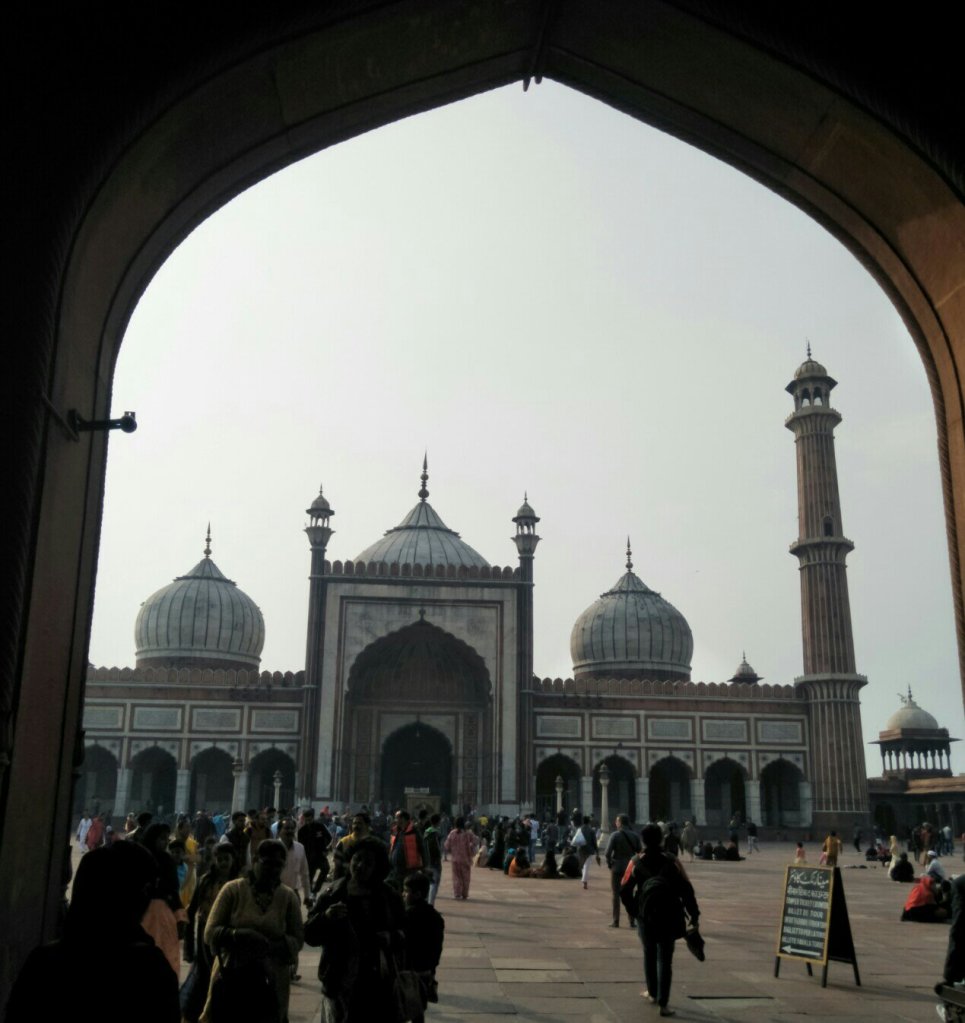
WHY I CHOSE JAMA MASJID
I chose to focus on the Jama Masjid for ‘Rediscovering Delhi’ project, as it is the most famous Masjid in India and has many praiseworthy features. People from all over the world come to see this mosque but I hadn’t paid much attention to it, although it is a few meters away from my house. However, when I started researching it for the project, I found many interesting facts about this mosque that I wish to share.
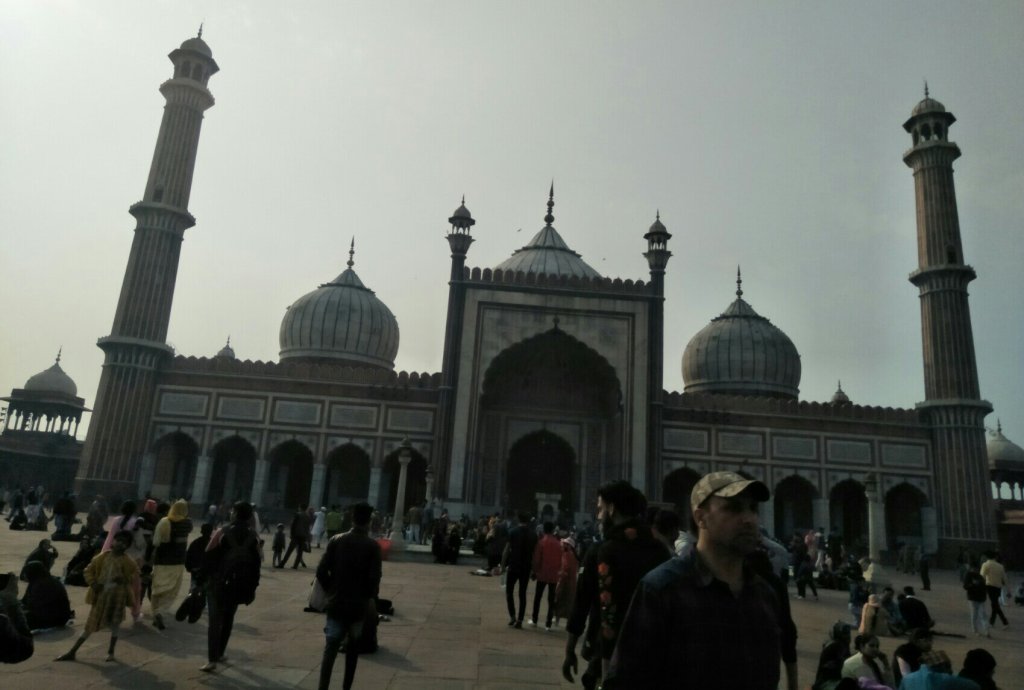
ABOUT JAMA MASJID
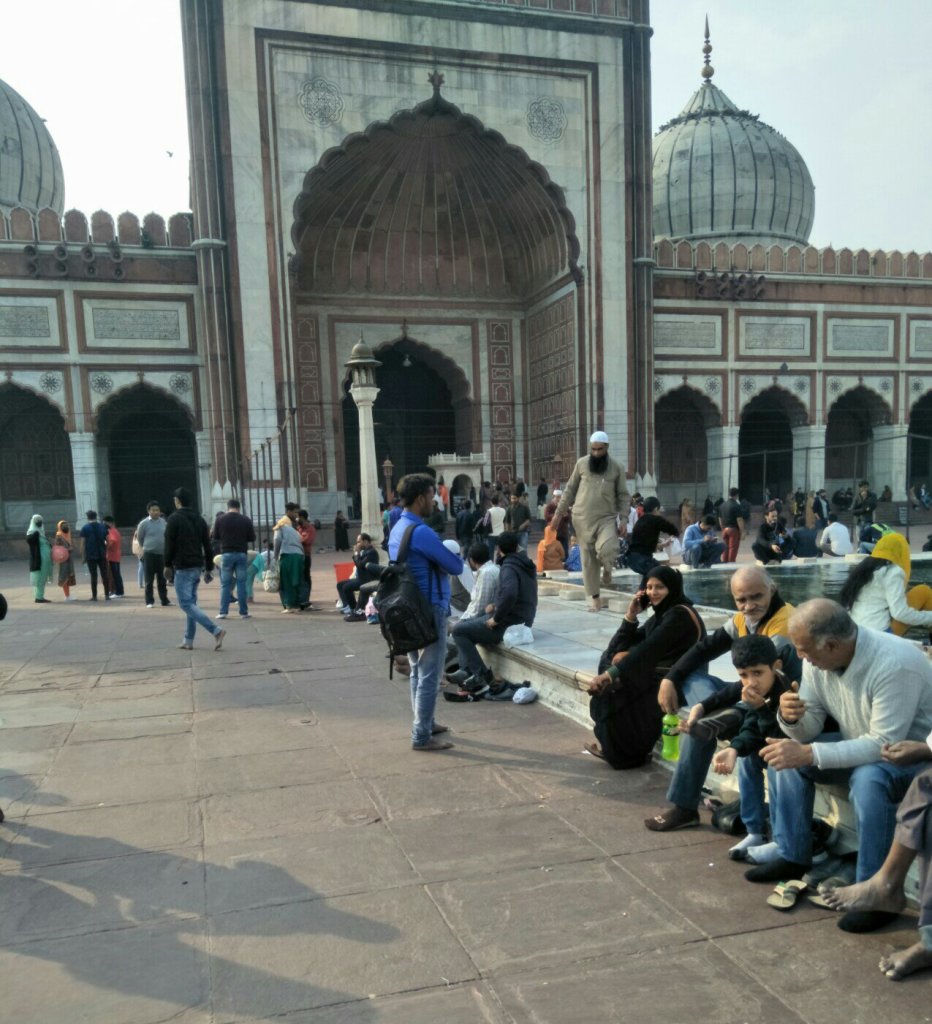
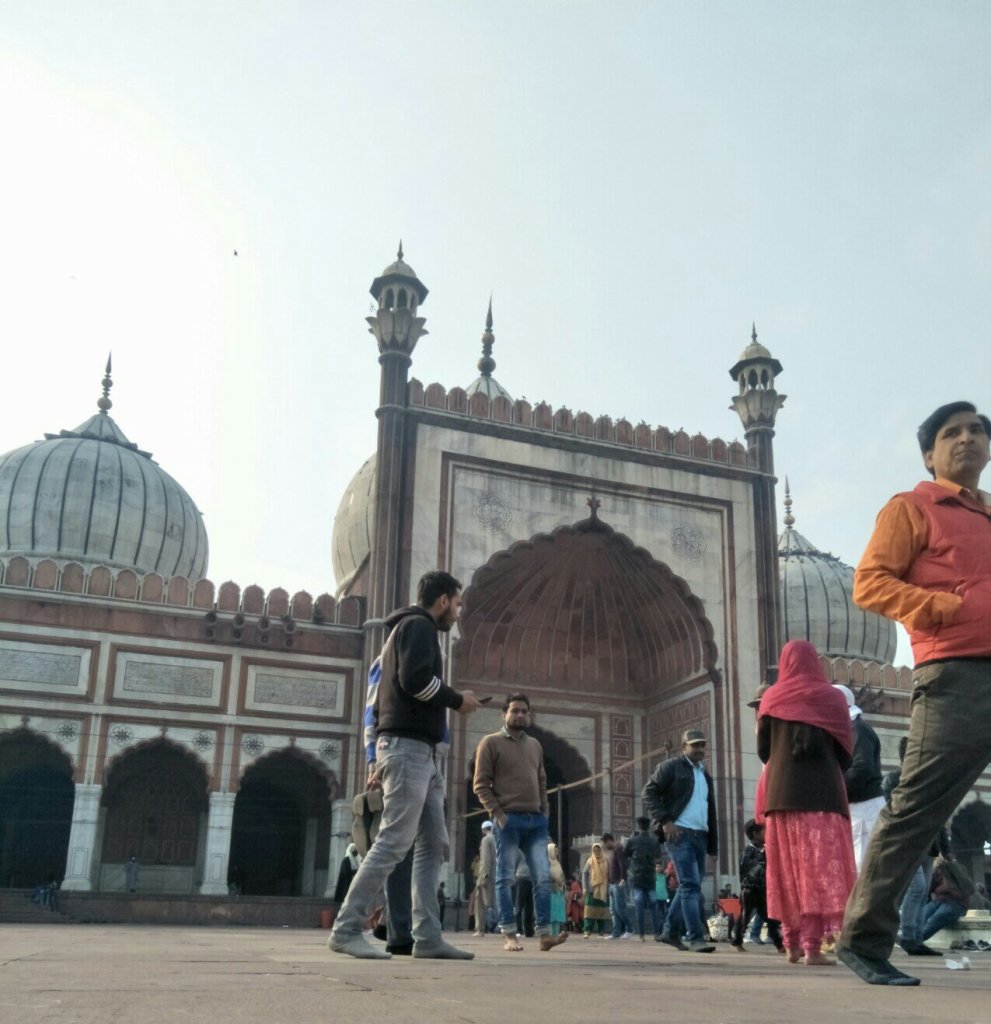
“Jama Masjid,” originally called Masjid Jahan Numa, was built by the fifth Mughal emperor Shah Jahan, who laid the foundation of this mosque on 6th October, 1650 AD, Friday, on the rocky cliffs of a hill called Bhojla Pahari. The best architects, building experts, carvers and engineers were employed to construct it. The precious stones used here were a gift of the Emperor. The construction work was done under the supervision of Sadullah Khan and the focus was on simplicity and Sufi style, which is a unique feature of the design of this mosque.
The history of Jama Masjid and its Imams is actually connected with each other. Shah Jahan wanted to appoint an Imam whose strength of character and knowledge exceeded everyone’s. So, he chose Hazrat Syed Abdul Ghaffoor Shah Bukhari as the first Imam of Jama Masjid. The imams of this mosque have been appointed from the family of Shahi Imams generation after generation.
ARCHITECTURAL FEATURES
Jama Masjid is an architectural masterpiece based on the plan and designs of Ustad Khaleel. Some of the architectural features of the Masjid are:
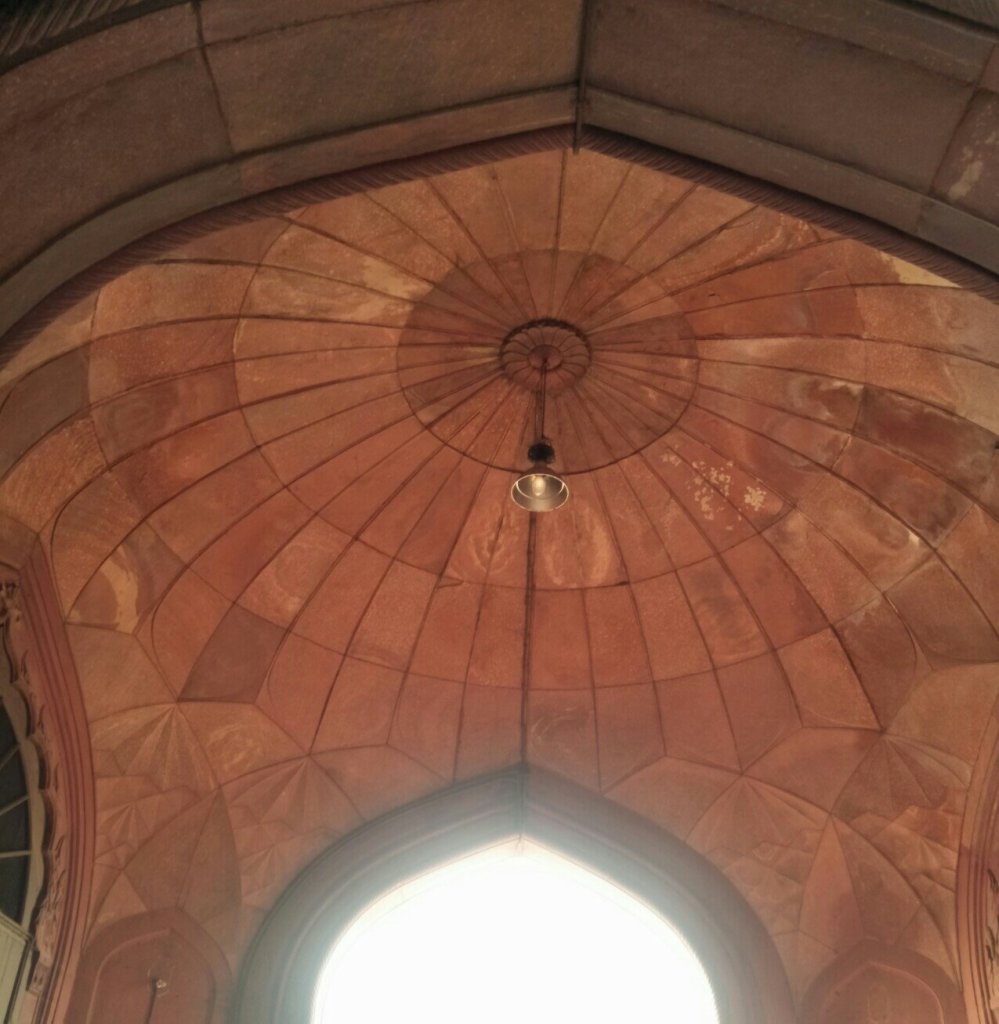
- The Three Gates
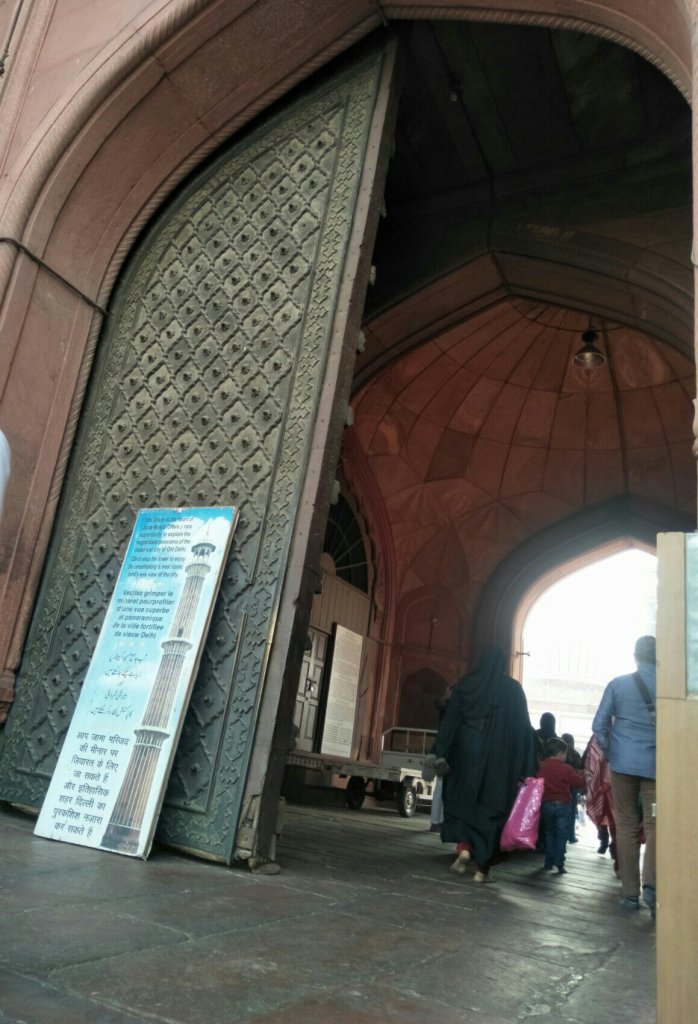
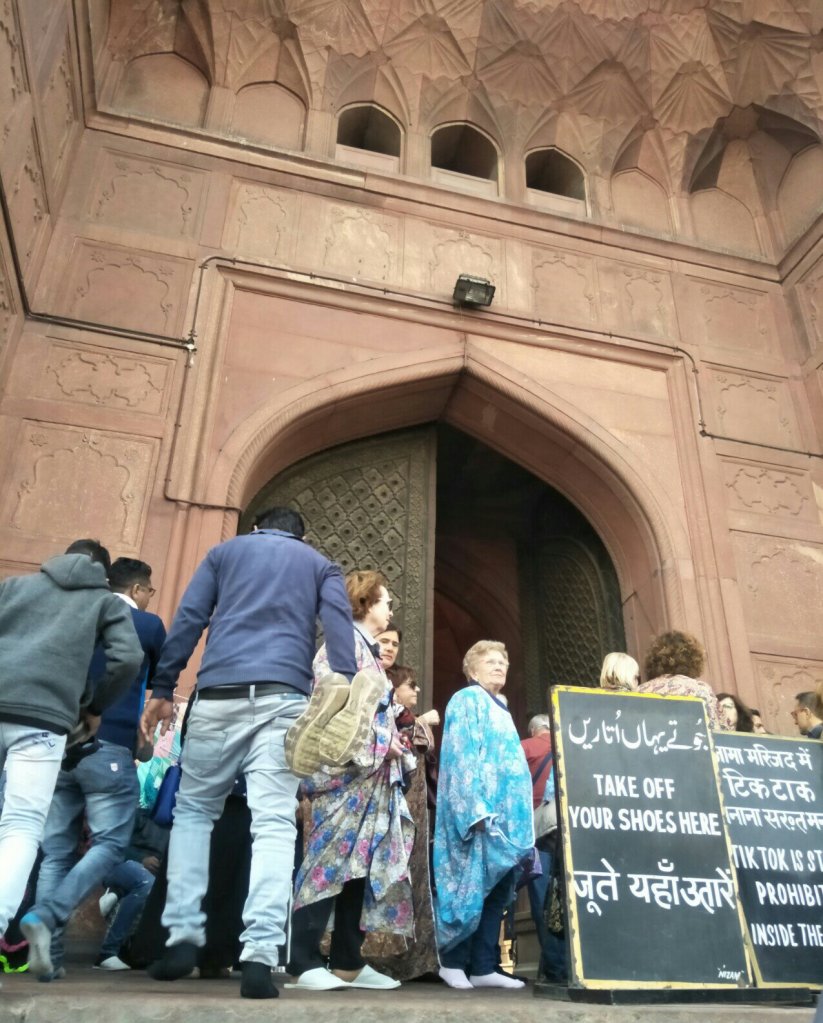
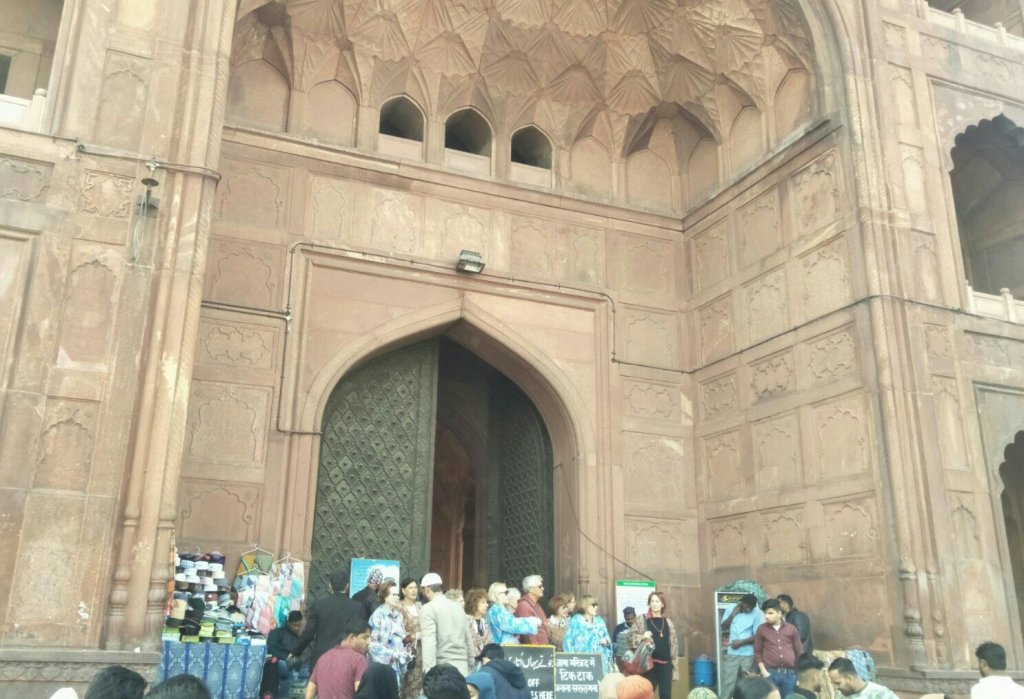
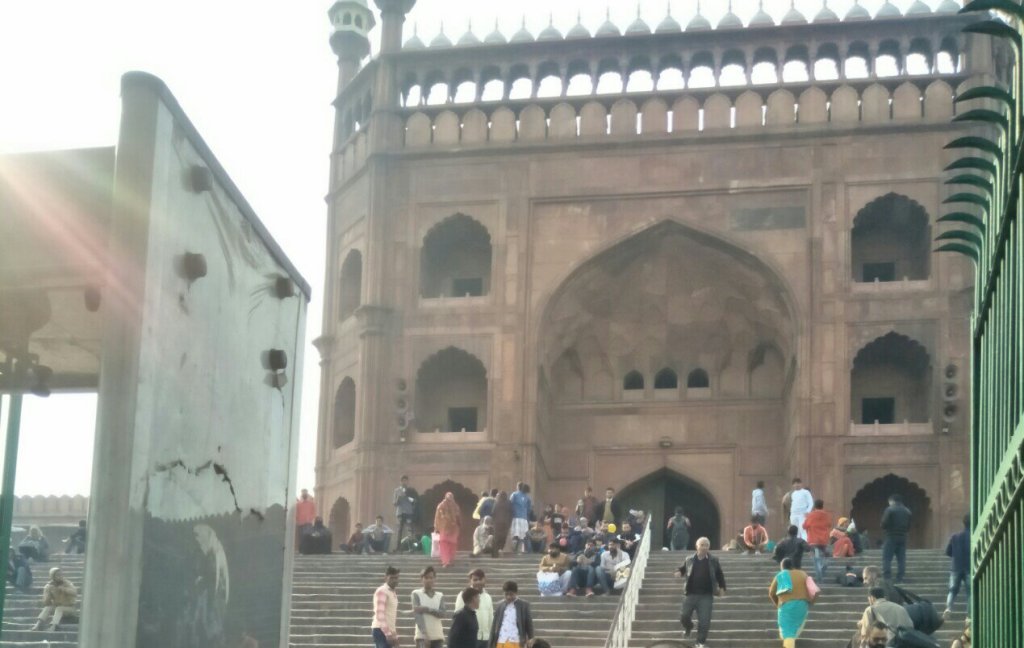
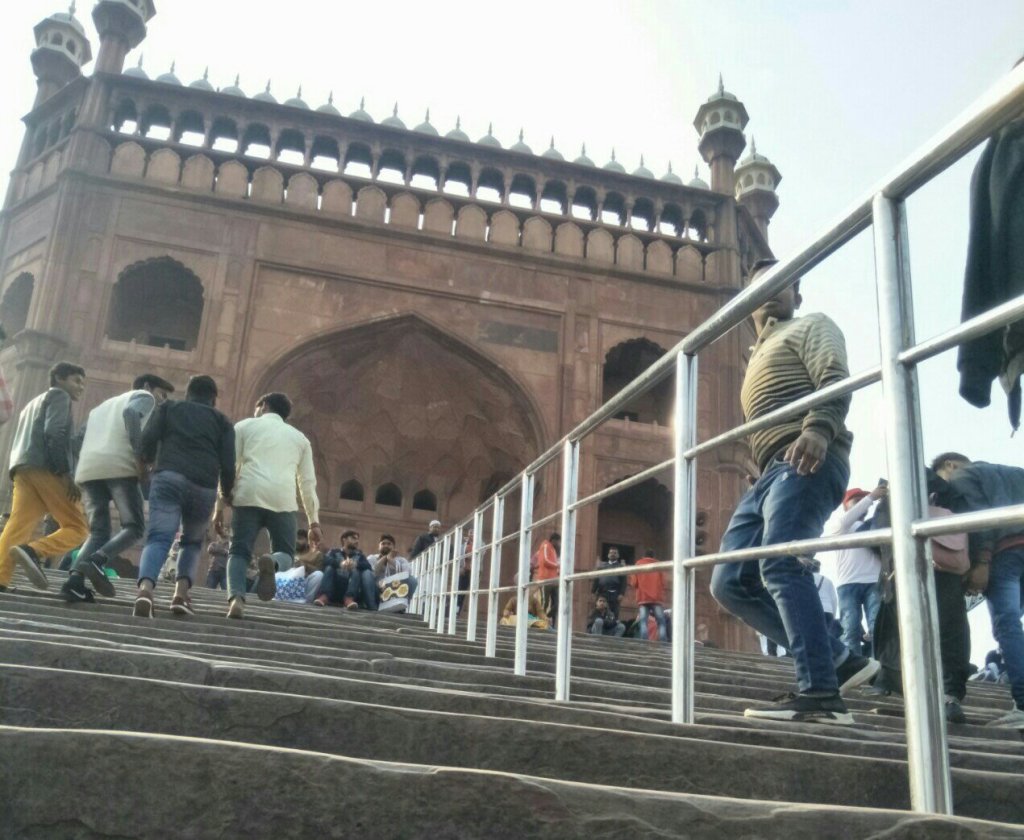
Jama Masjid has three gateways: the southern gate; northern gate; and eastern gate or the Royal gate. The southern gate has 33 steps and is meant for the general public. The northern gate has 39 steps and was meant to be used by the nobles. The eastern gate has 35 steps and was officially reserved for the Mughal emperor; that’s why, this gateway was called the Royal gate. This gate is grander than the other two gates. All three gateways face different directions.
- The Minarets
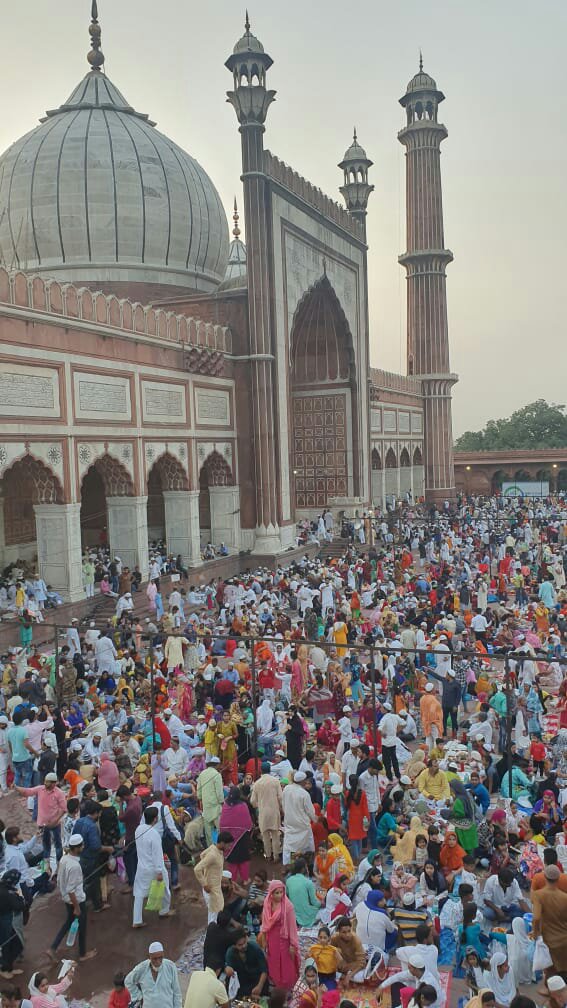
Two Minarets add to the grandeur of the mosque. These lofty Minarets are 130 feet (40 m) high and consist of 130 steps, longitudinally striped with marble and red sandstone. Visitors are allowed to climb one of the minarets at the costs Rs. 20/- per person to get a panoramic view of Delhi. There is counter inside the mosque to buy tickets to climb the minaret.
- Wadhu khana
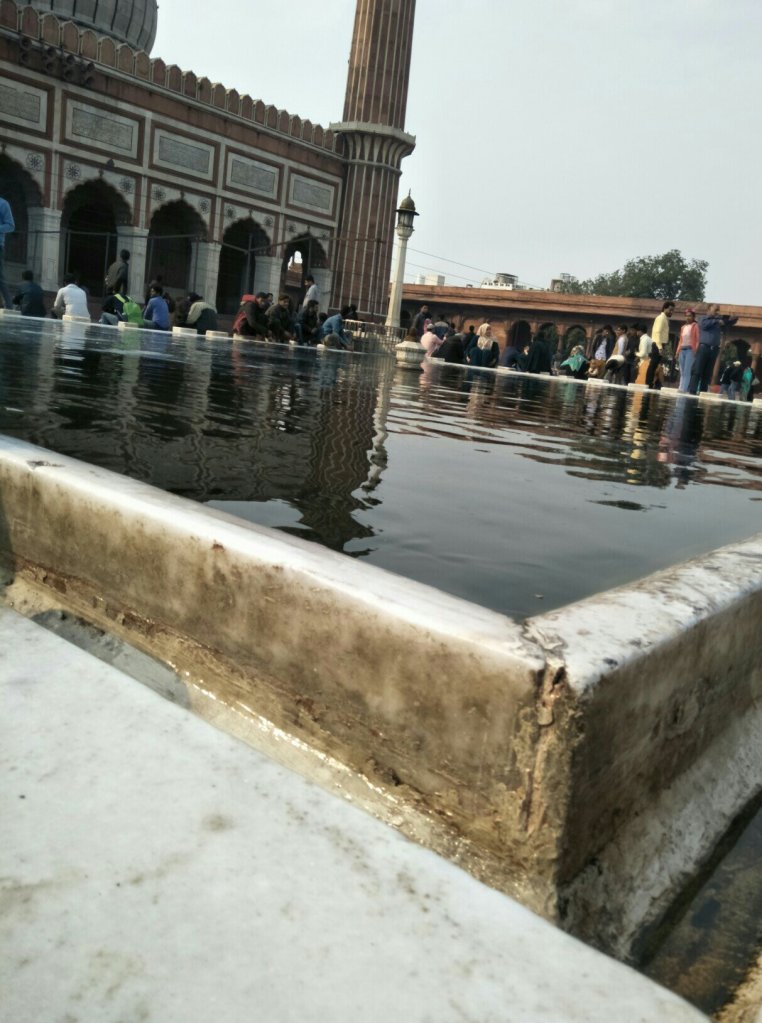
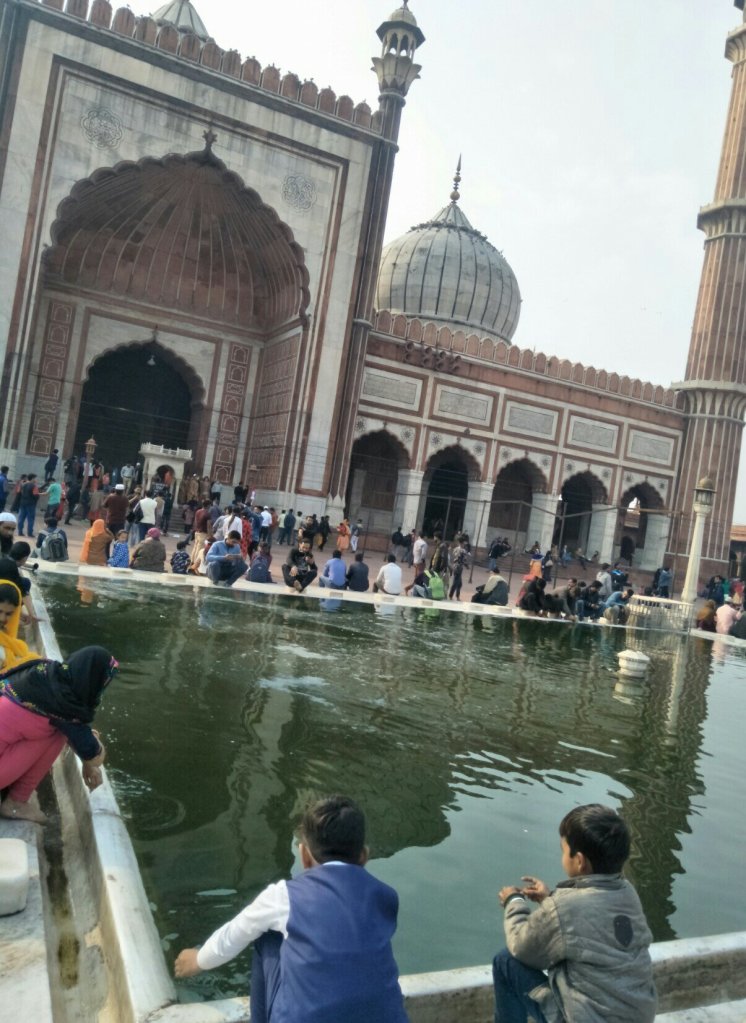
Muslims who come to offer prayer (Namaz), first of all wash their hands, mouth and feet before going to pray; it is called ‘Waddhu’. There is a beautiful Hauz (Waddhu Khana) built with white marbles, which also enhances the beauty of this mosque. At any given time, 60 people can sit and wash their hands and mouths in this Hauz. There are also hundreds of taps that are used mostly on Fridays, when thousands of people come together to offer Friday prayers at 1.00 pm.

- An Interesting Fact
The board at the eastern gate of the mosque states that Aayats of The Holy Qur’an were recited upon each stone of the mosque before being placed. It is quite unbelievable that thousands of stones that were used to build the mosque were thus blessed.

VISITORS
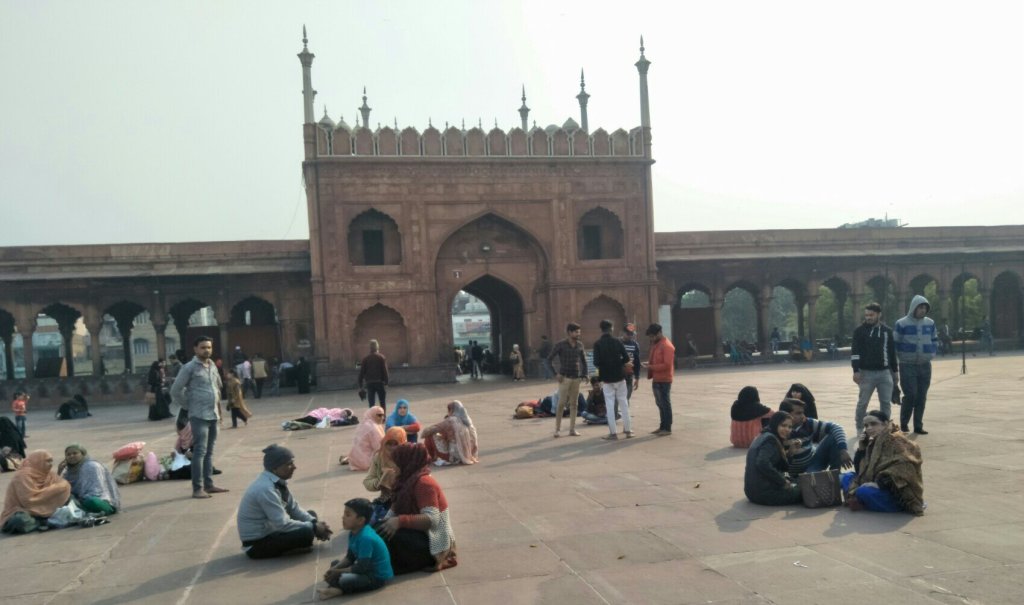
This monument is a huge attraction for foreign and domestic tourists. Those who come to explore Delhi also visit the Jama Masjid. Although the mosque is open from 6 am to 9:30 pm (Fajr to Isha prayer time), this is only for those who come to offer prayers. Others can visit the mosque from 8 am to 7 pm (6 pm in winters, as the days are shorter). If anyone needs a guide, the Masjid committee provide the services of guides.
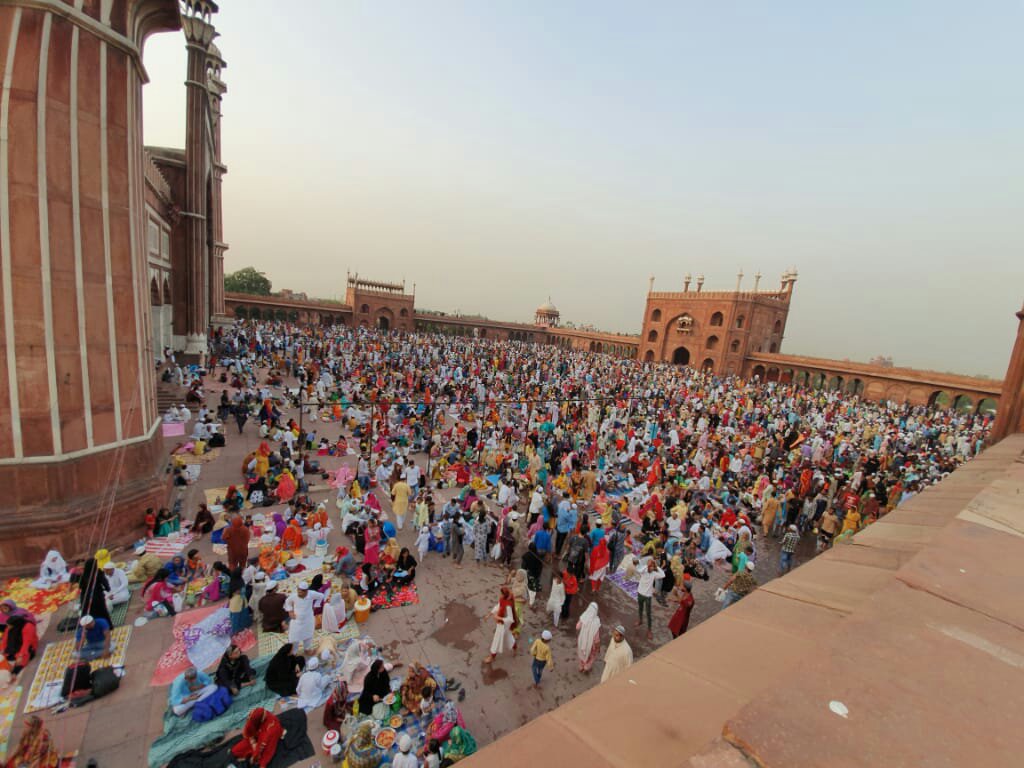
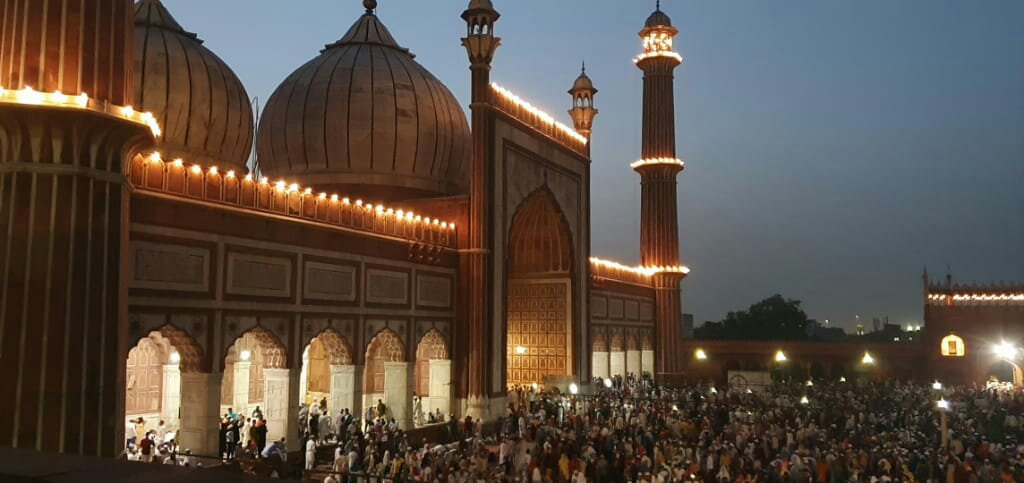
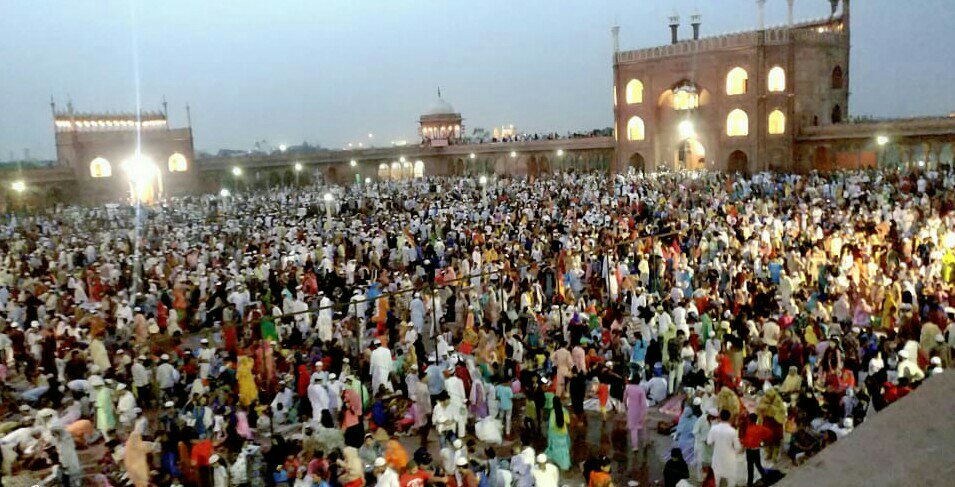
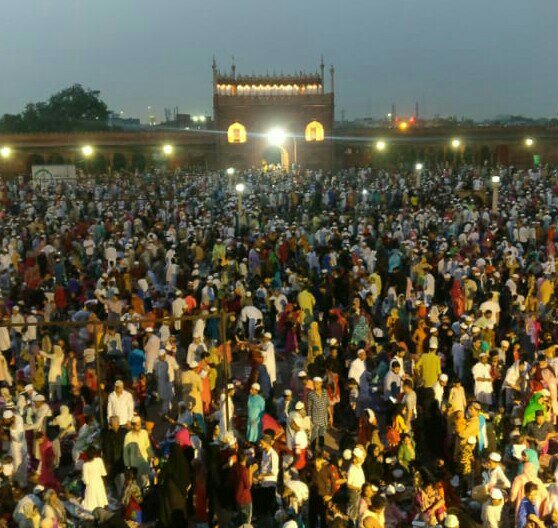
JAMA MASJID DURING THE ‘RAMADAN’
Ramadan is the holy month for Muslims. In this month, they fast from 4 am to 7 pm (fajr to maghrib prayer time) during the entire month. At this time, Jama Masjid is decorated with lights. People come to break their fast at Maghrib time (around 7 pm). Around 500 people break their fast with khujoor (dates), fruits and Rooh Afza. The food and beverage are organized everyday by the Masjid Committee and are available free of cost to all. The Mosque looks especially beautiful during the month of Ramadan.
MEENA BAZAAR
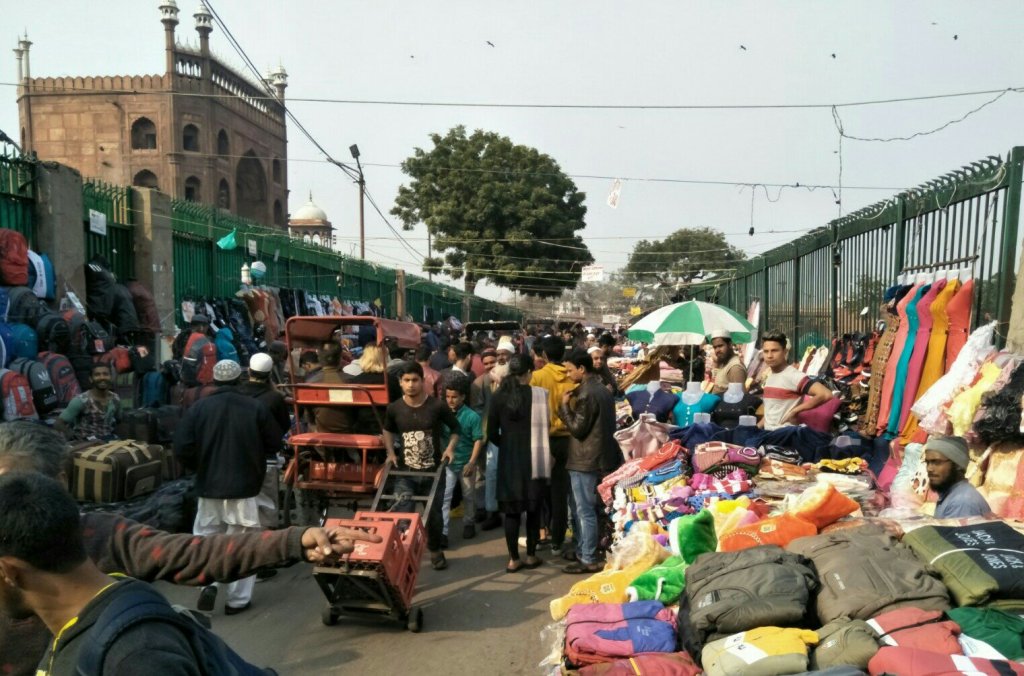
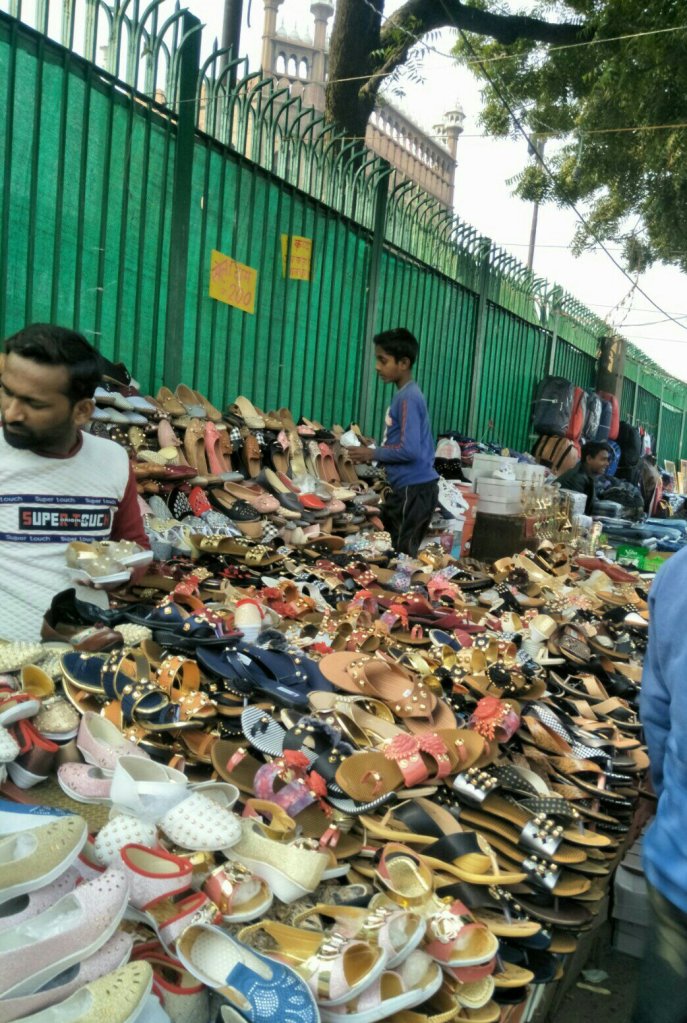
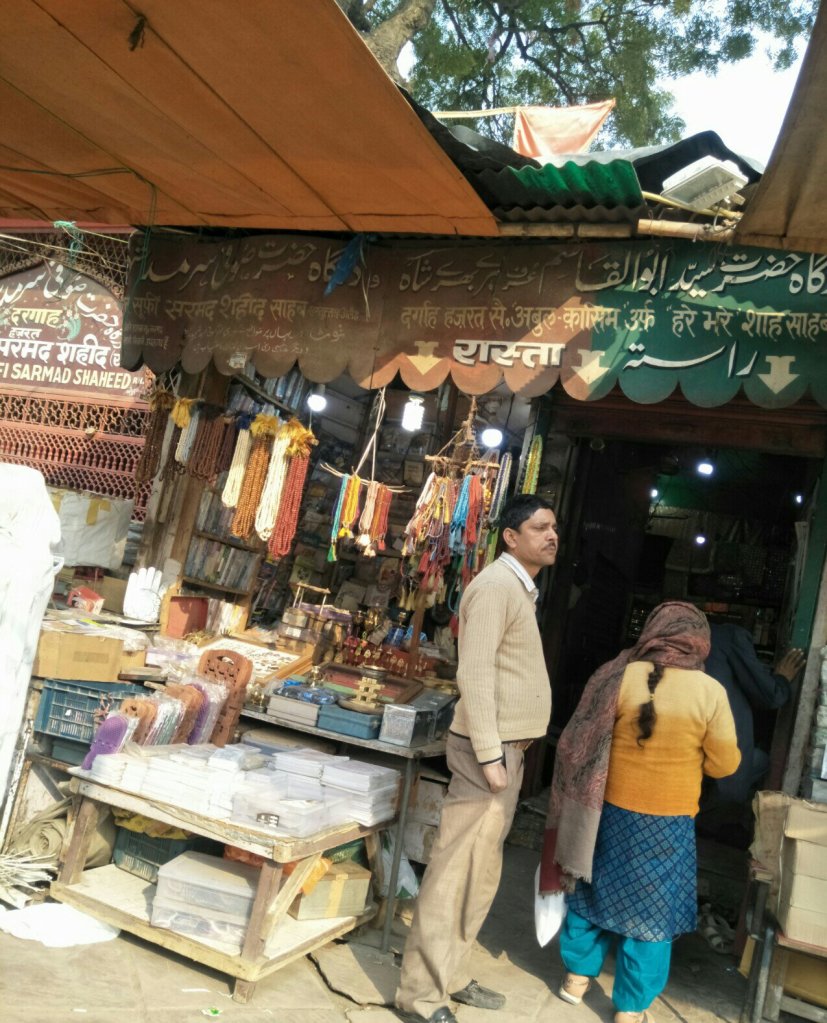
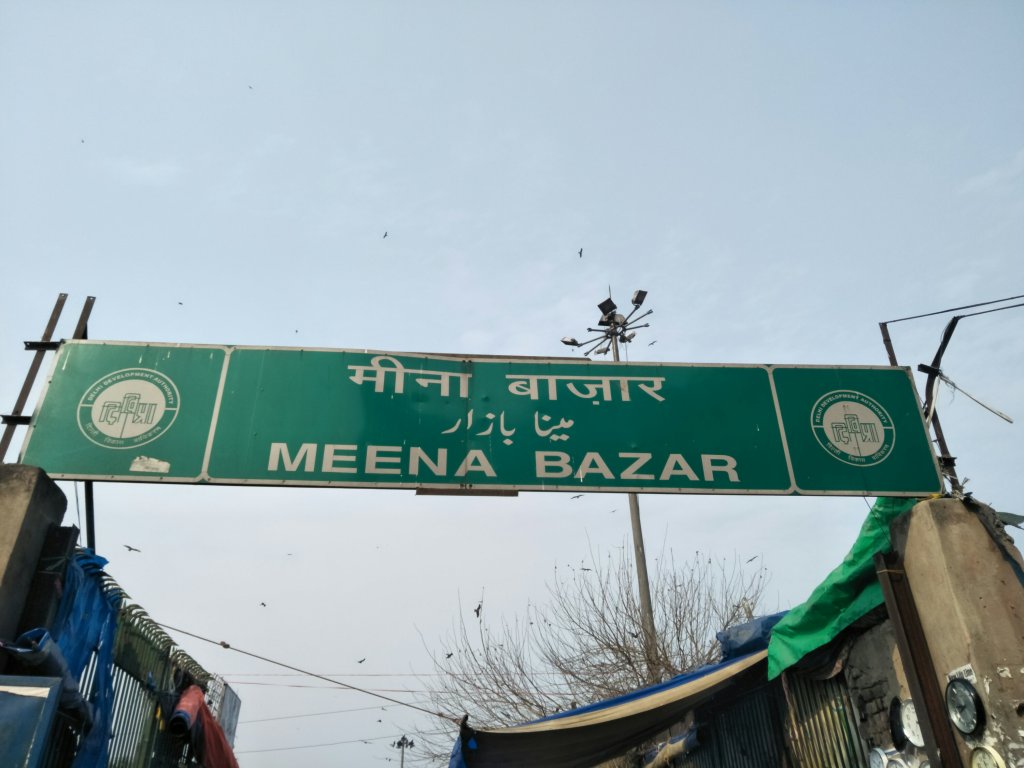
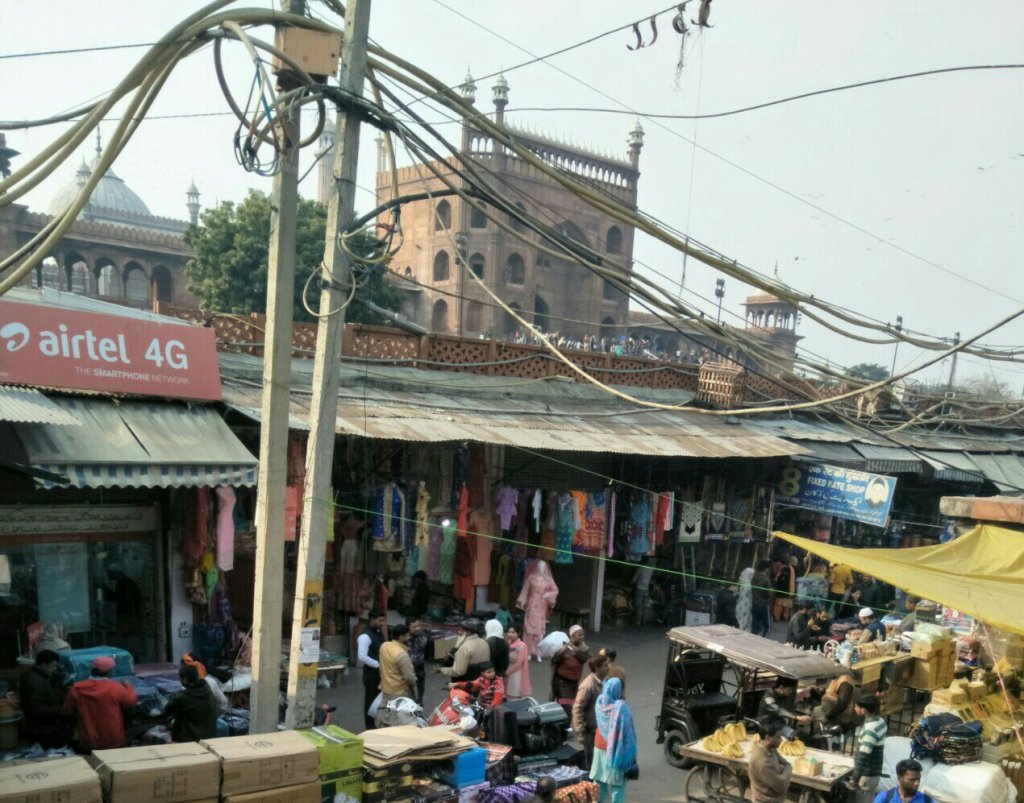
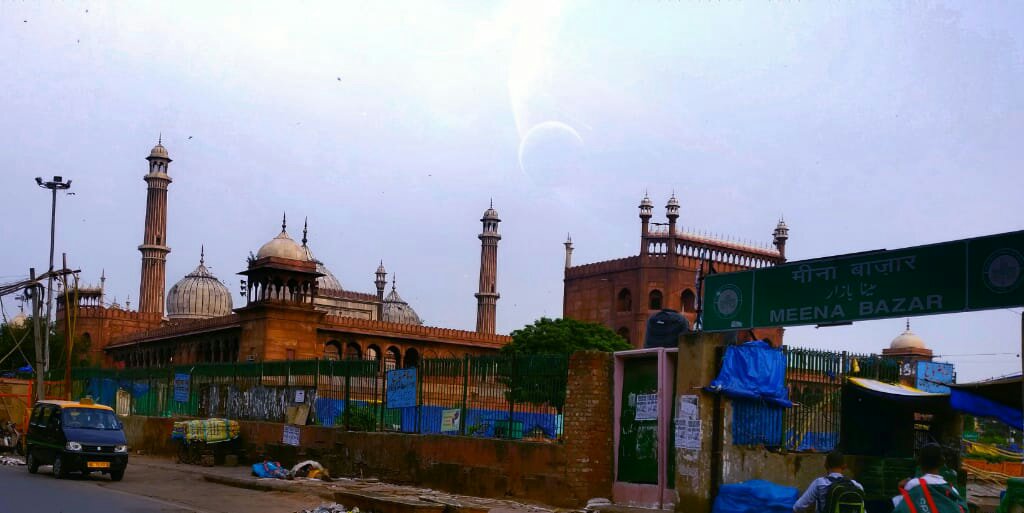
The mosque is surrounded by an old bazaar called Meena Bazaar. It was started by the Mughal emperor Shah Jahan and continues to even after 350 years, although it seems to have lost its earlier charm. The bazaar is known for its shops and food. It is situated at Gate No. 2 of the mosque.

JAMA MASJID THROUGH THE AGES
In hundreds of years of its existence, many changes have been made in this Mosque. The railings to the stairs of the gateways were added to control the people on Fridays and other holy occasions. The government and the Masjid committee take care of the maintenance and other requirements of the Mosque.
CONVENTIONS
As this monument is a mosque, it was built for the purpose of prayer. But these days, many people look at it as a monument. There are some restrictions that are observed in keeping with the Islamic culture. Given below are the restrictions enforced by the committee of Jama Masjid:
1. Women are not allowed to enter after sunset
2. No videography is allowed inside the premises of the monument
3. Women cannot offer prayer in the men’s section (there is a separate space for women to offer prayer)
4. Tourists who mainly visit to see the Masjid are not allowed to enter in the prayer area.
5. As this is a mosque, no music or any other entertainment activities are allowed inside.
6. Footwear is not allowed inside the mosque.
A MASJID OR A MONUMENT
The monument was built primarily to offer prayers. But now, non-Muslim visitors look at it as a monument of Mughal art and the Islamic culture; while for Muslims, it is a mosque where they come to offer prayer.
MY PERSONAL EXPERIENCE
Despite living here for so many years, I didn’t know much about Jama Masjid. While researching for the project, I learned many things; such as the history of the mosque, Mughal art, and many more facts about Islamic culture. I come to break the fast at this mosque in the month of Ramadan now, as that experience is very good.
While researching, I went to the women prayer section and came across many women offering Namaz. I loved the experience of offering Namaz with them. One of the guides in the mosque said that although it is a mosque, half of its visitors are non-Muslims. Foreigners come in large numbers to see the Mughal architecture. People also visit the monument to experience Muslim culture and to observe people offering Namaz. I also had a chat with a German visitor, who said that he felt at peace while walking around the mosque and seeing Muslims offering Namaz; the beautiful words of Azan and the fact that Muslims wash their mouth and hands just to be sure that they are clean enough to offer the Namaz.

Written and compiled by RAMSHA NASIR.
 Rediscovering Delhi