
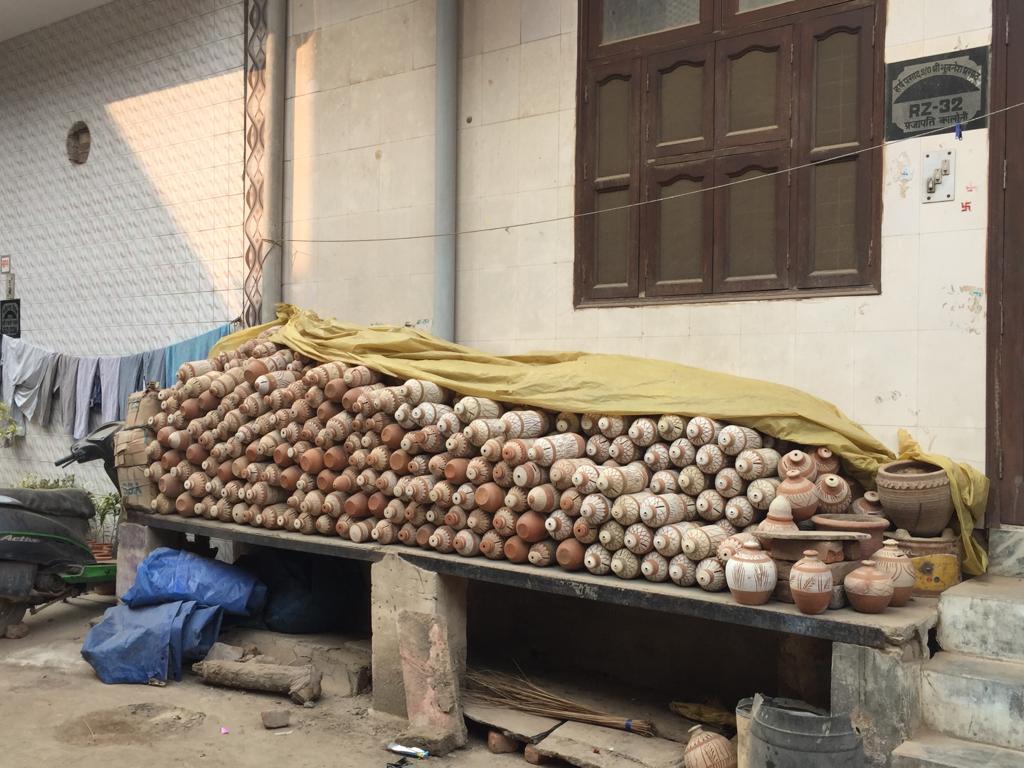
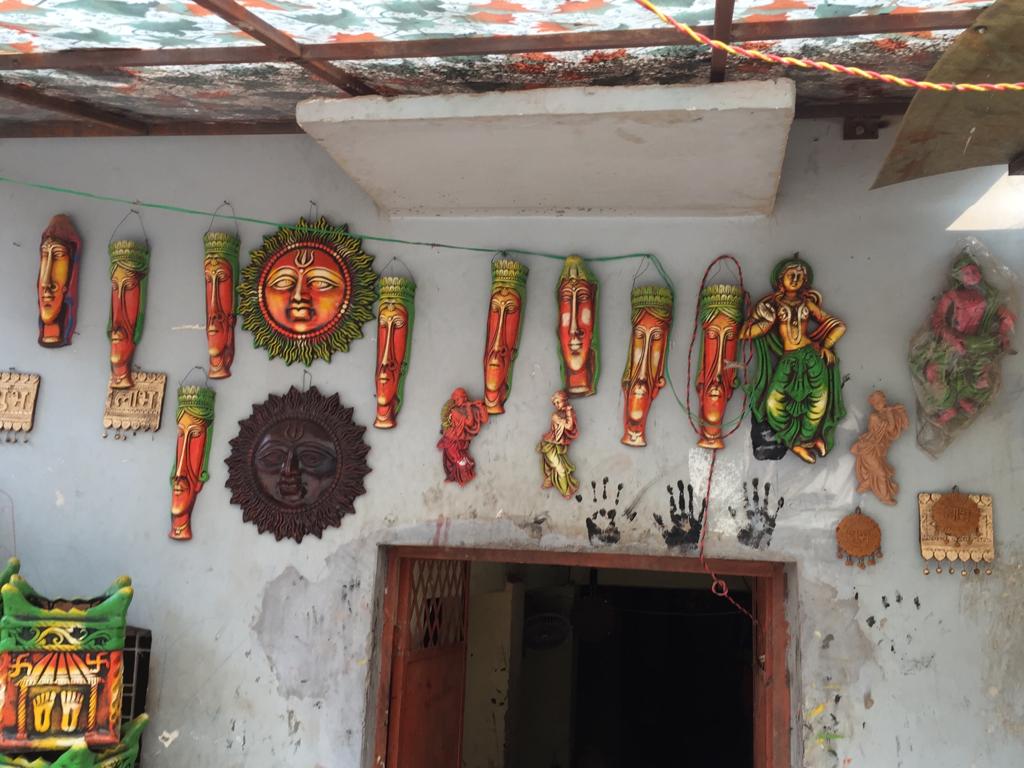
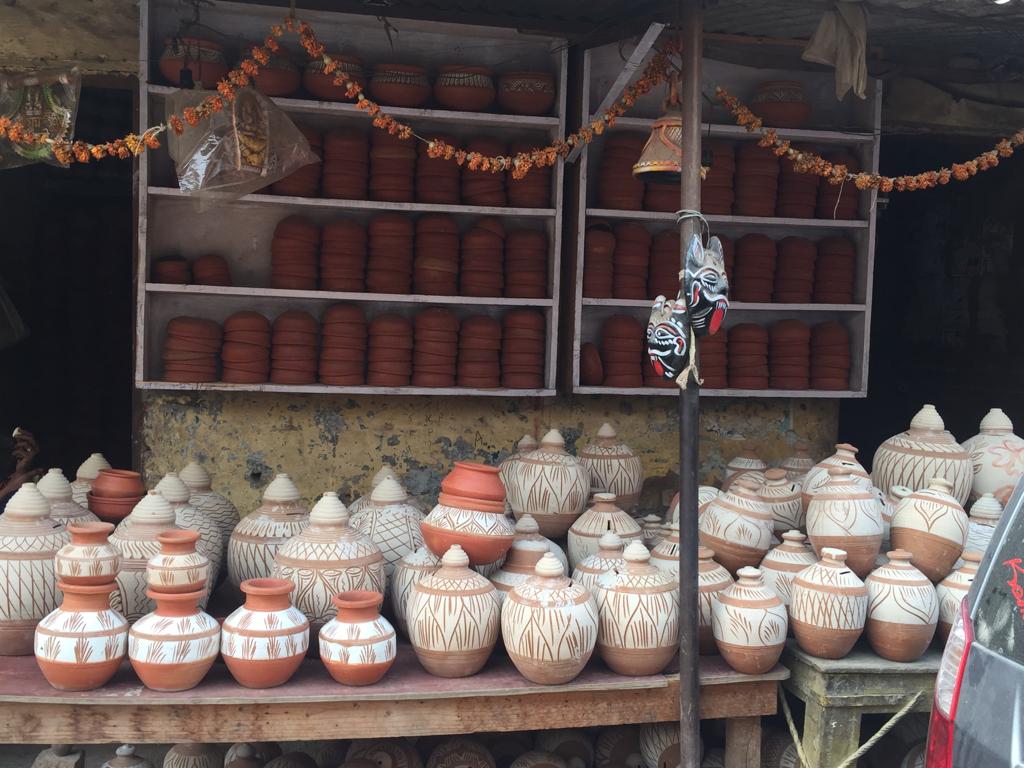
Kumhar Colony is a village of potters located in Uttam Nagar, West Delhi. The potters living there have been involved in the art of pottery since several generations. They use
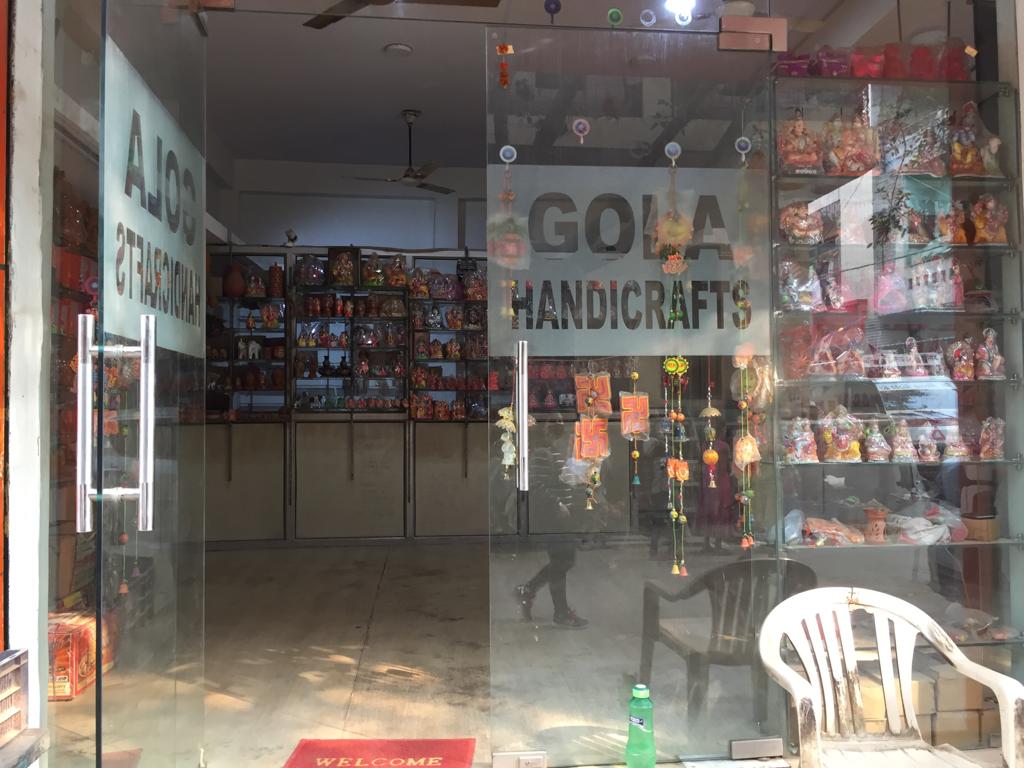
their skills to make diyas, sculptures of deities, teacups, cooking utensils, wall hangings and other decorative items.

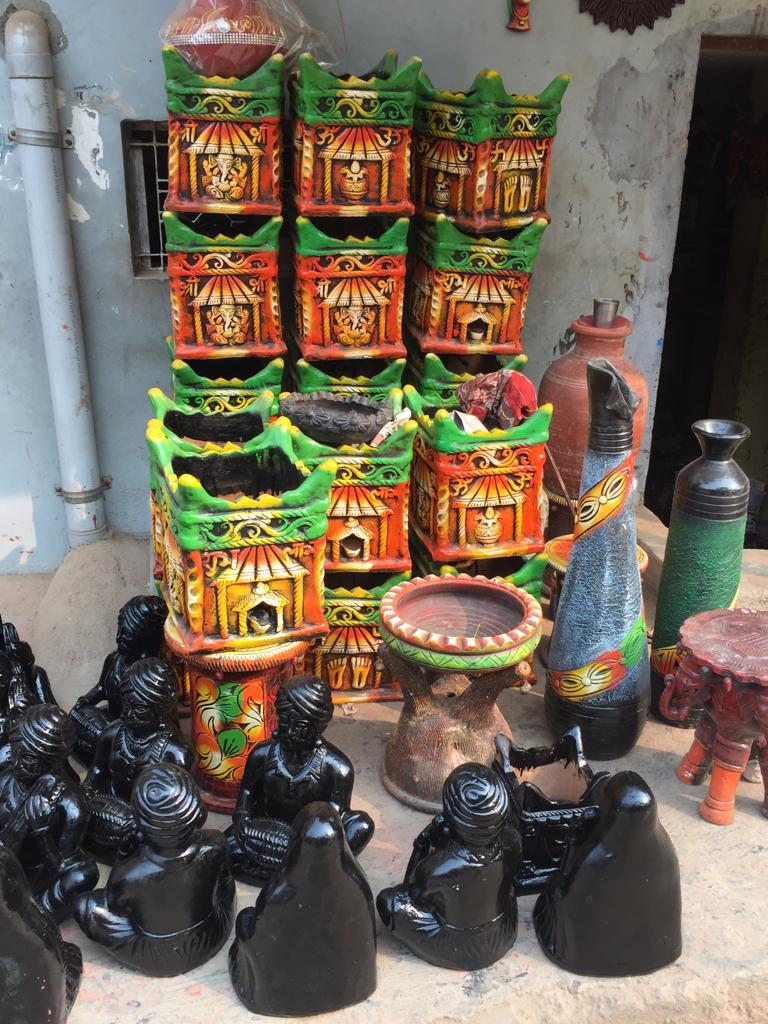
The streets are fairly broad and filled with mounds of clay. There is a main street where
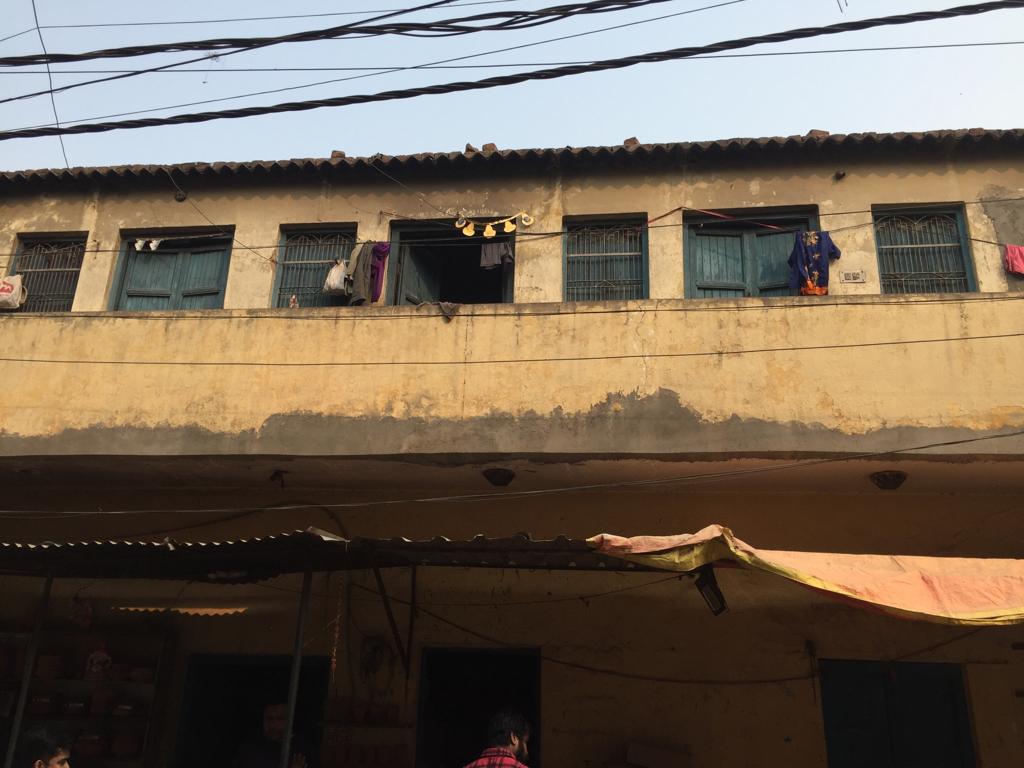
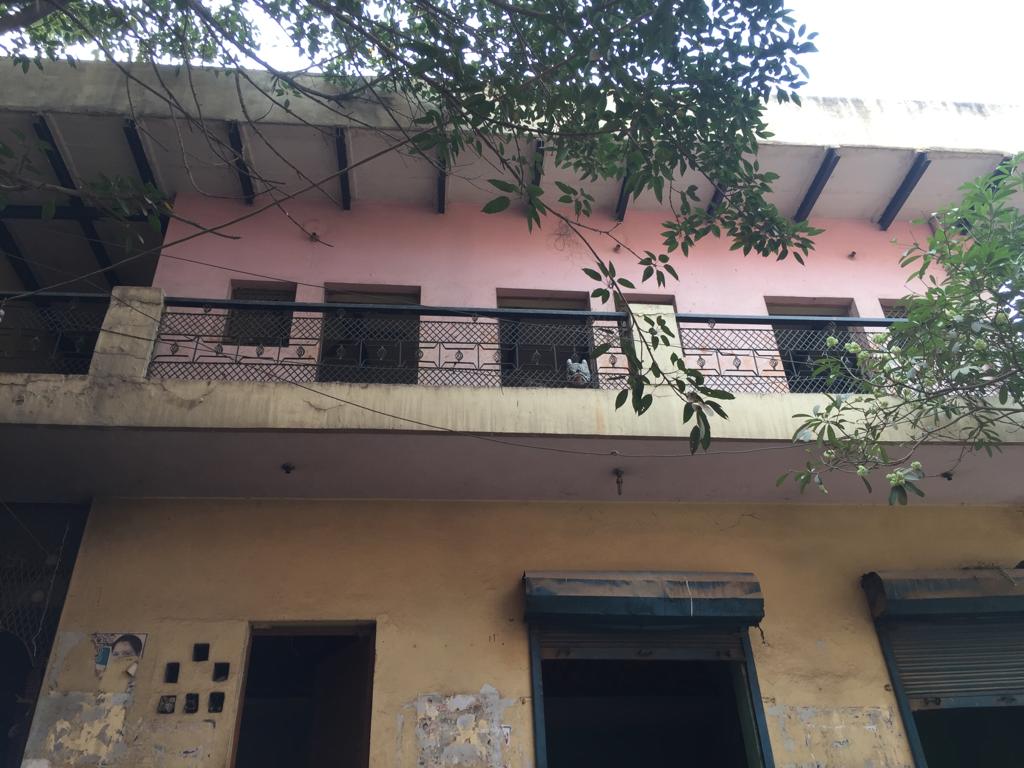
most shops are set up and small streets running perpendicular to those. The houses of the potters are mostly two storeyed and used as a storehouse for keeping big vases and sculptures. What enthralled me the most was the fact that men and women contributed equally to this artwork and believed in passing their skills down to their children in order to remain connected to their indigenous identity.Some of the common sights in Kumhar Colony are that of women crushing clay, painting diyas and sculptures and of children playing with spinning top, eating cotton candy and doing their school work. Most of the women living there still follow the tradition of covering their faces with a veil in front of the elders.
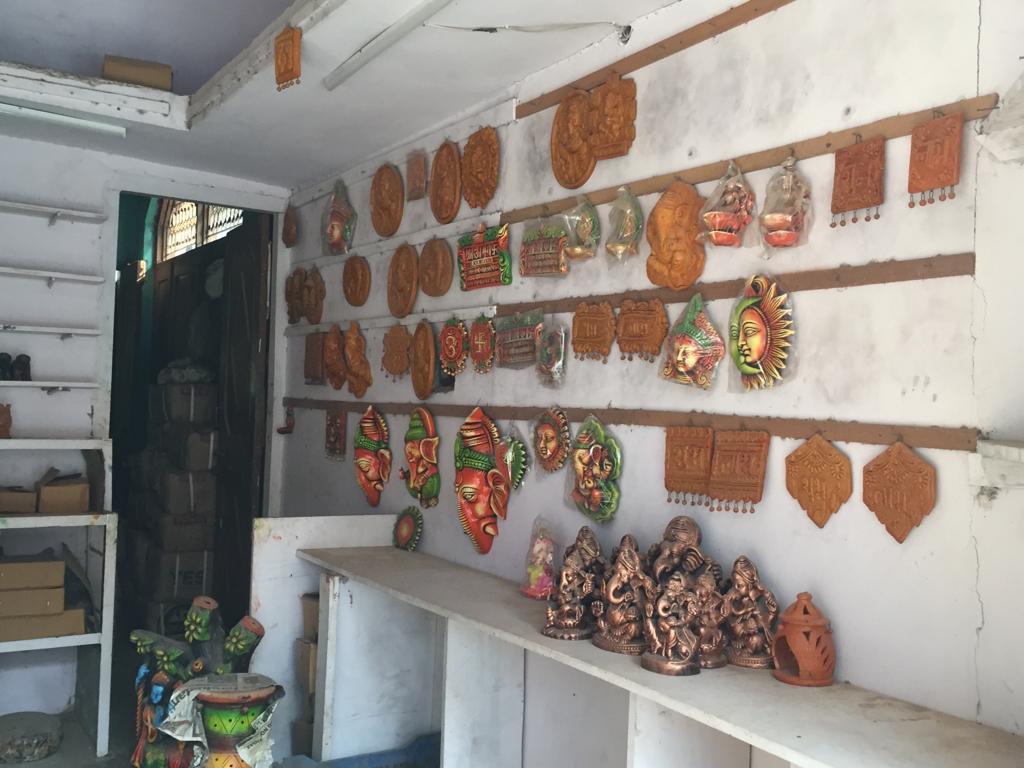
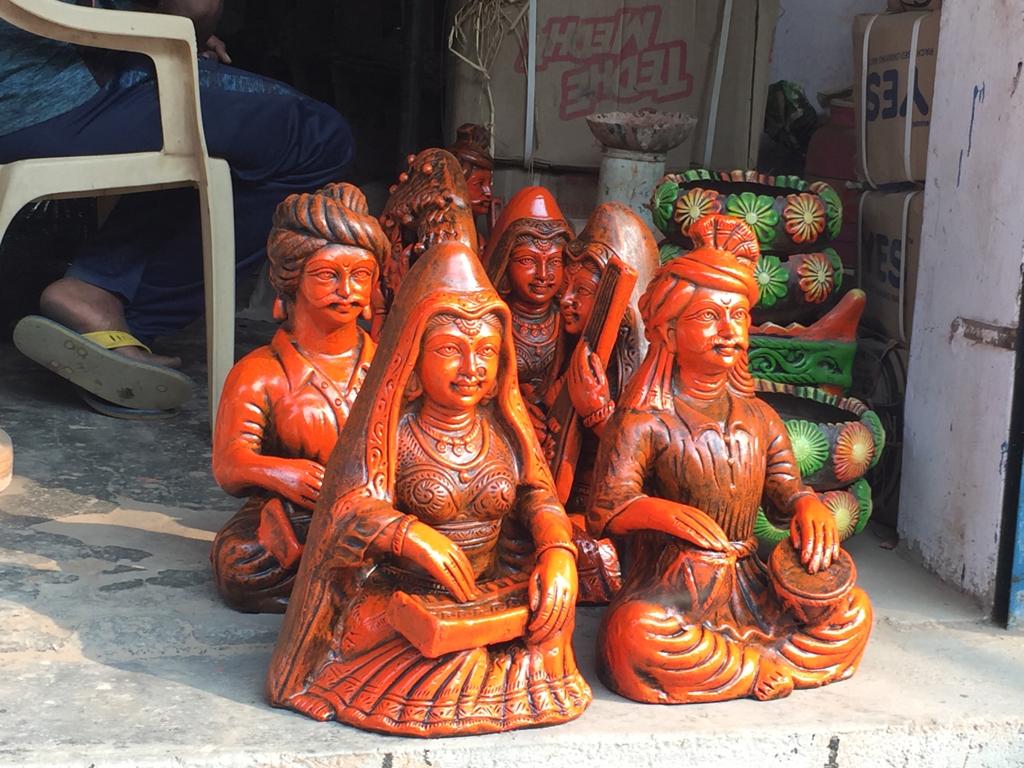
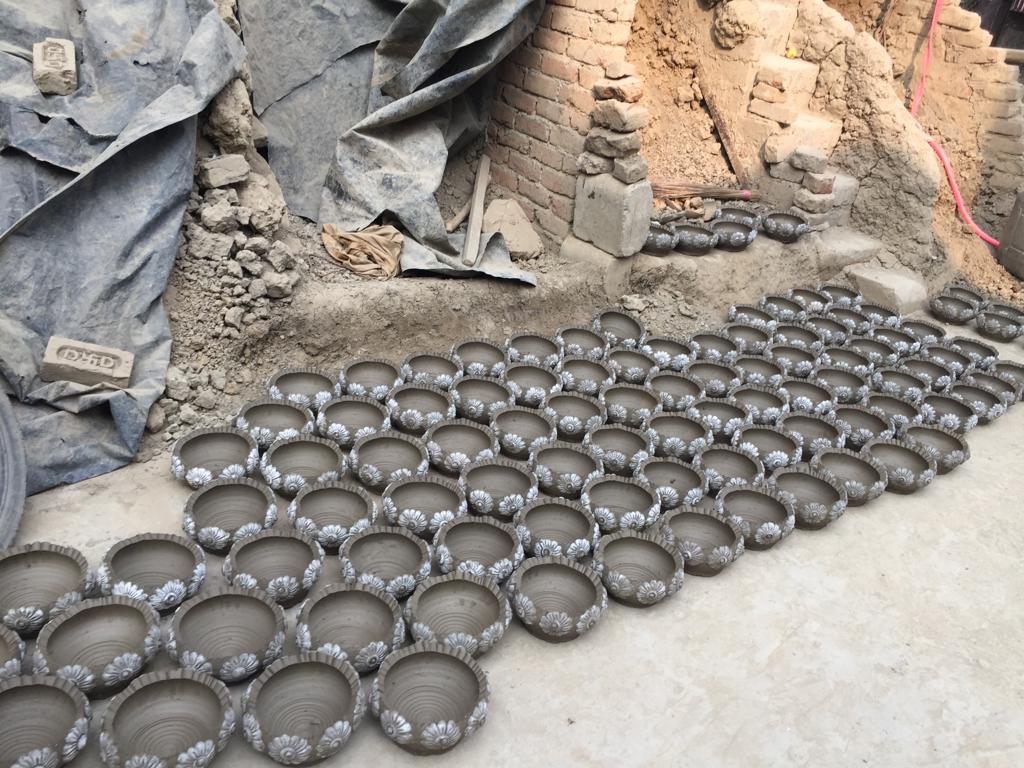
Almost all the children we questioned there do go to a nearby school on foot and are not
involved in the family work till they are much older. The community of potters living there hail from different parts of India: mostly Rajasthan and Haryana. The clay that they use is majorly brought over from Haryana.
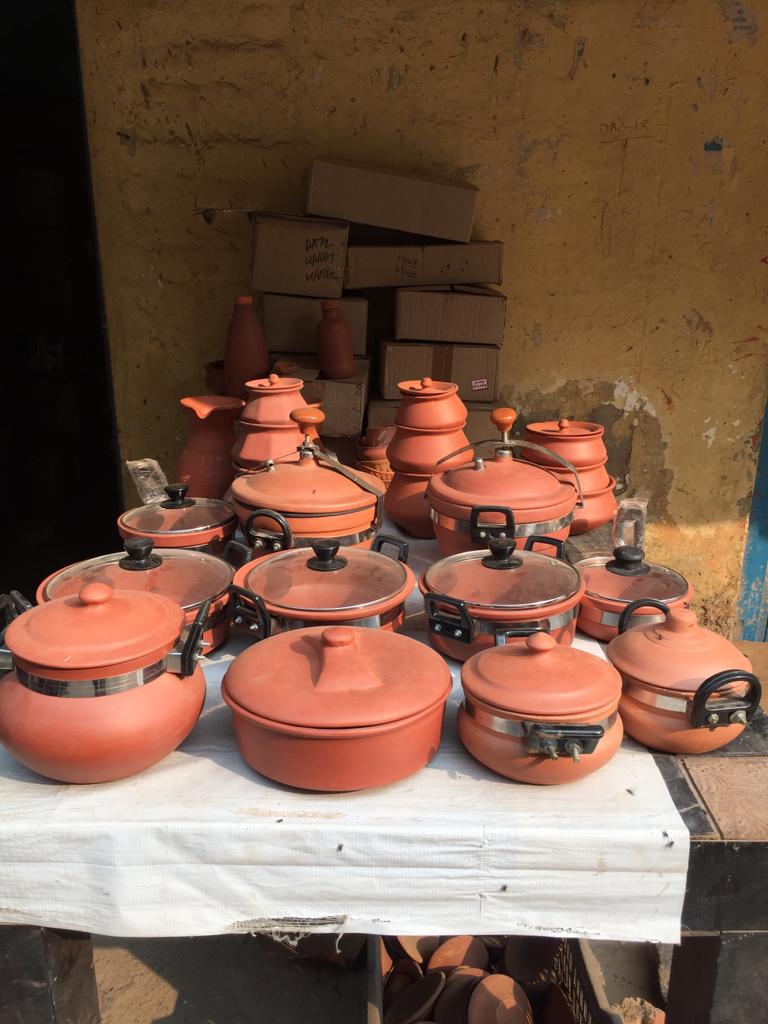
Earthen utensils have quite a few benefits:
- They are much better for the environment than plastic utensils.
- The porous nature of the clay pot allows the moisture and heat to circulate throughout the food making it more aromatic. This also helps retain nutrients in the food.
- Cooking in clay pots also infuses the food with nutrients like calcium, phosphorus and magnesium. It also allows the food to retain it’s natural oils.

People in Kumhar Colony lead a simple life and follow a routine. Even though they do not
make enough money to provide better facilities to their children they still do not deprive
them off their right to education. In the midst of the hustle and bustle of Delhi, this colony is a hub of potters who have worked since generations to keep the intricate art of pottery alive.
Compiled by Ridhima Gandhi,Akansha Bharali and Nandini Lohia.
 Rediscovering Delhi