
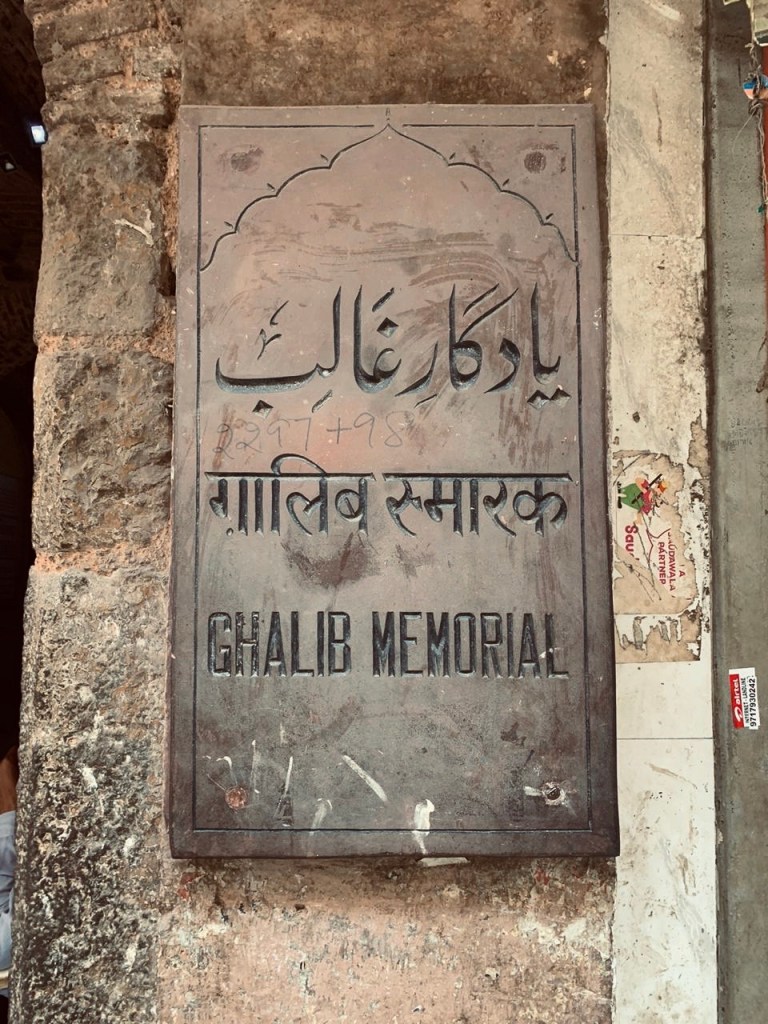
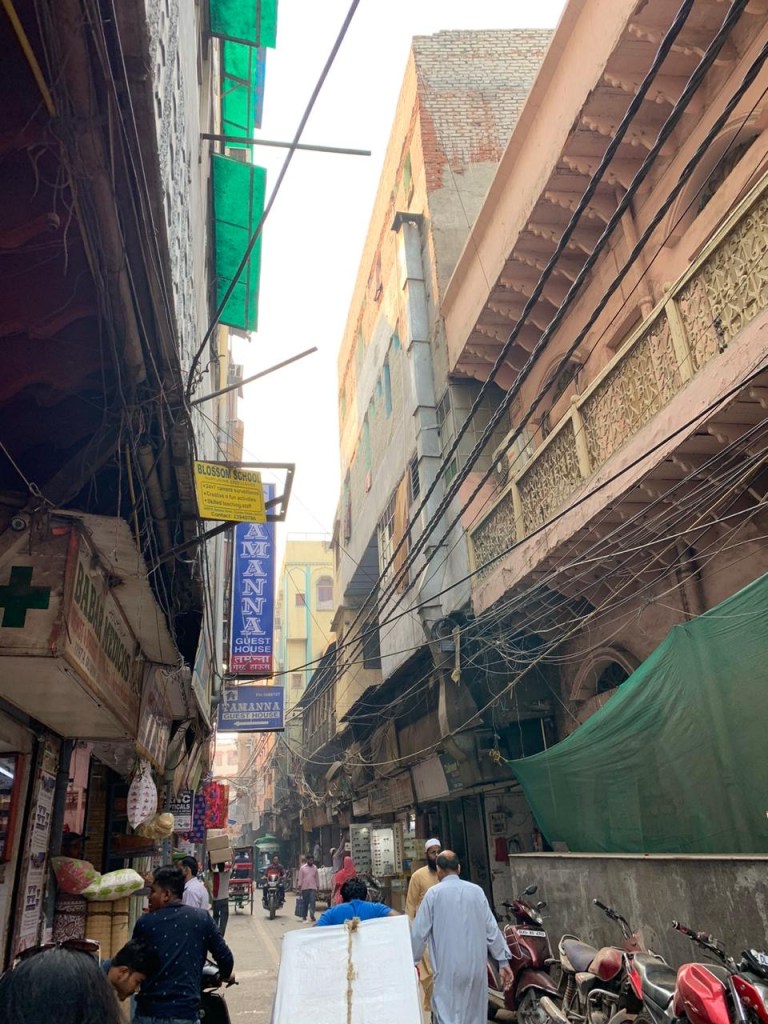
As one steps foot in the disarray and dreary alley of Gali Qasim Jan in Old Delhi, where the famous Ballimaran, Ghalib’s Haveli is situated, one observes the commotion of daily affairs being carried out by the vendors and local onlookers across this narrow street of Chandni Chowk.
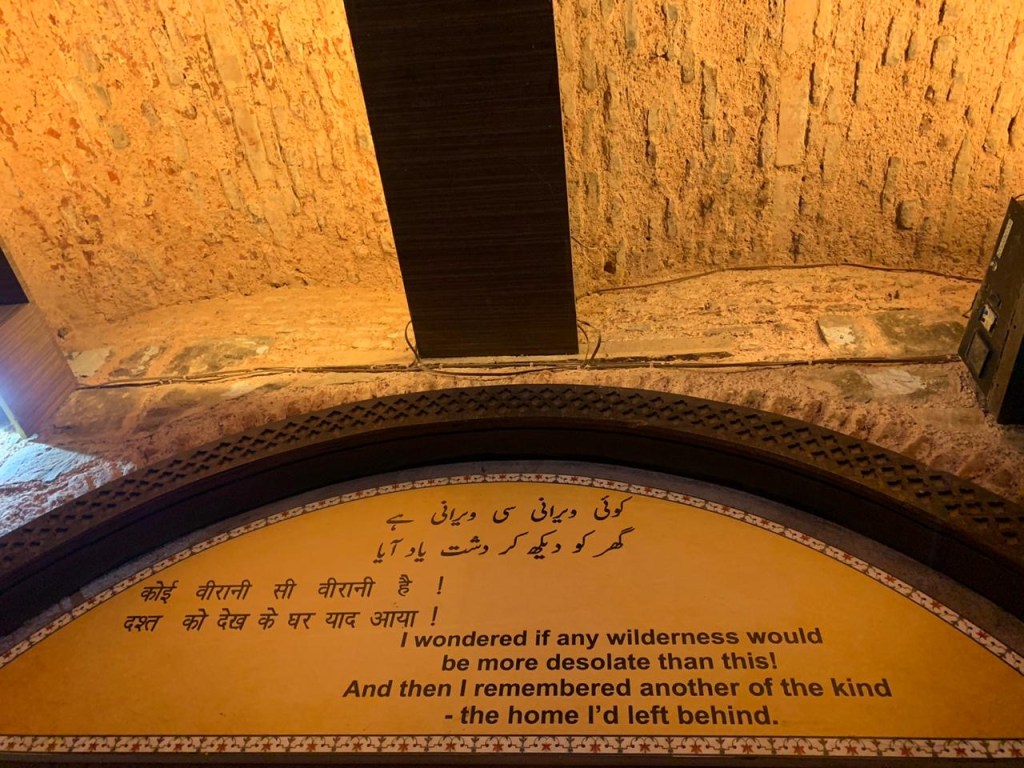
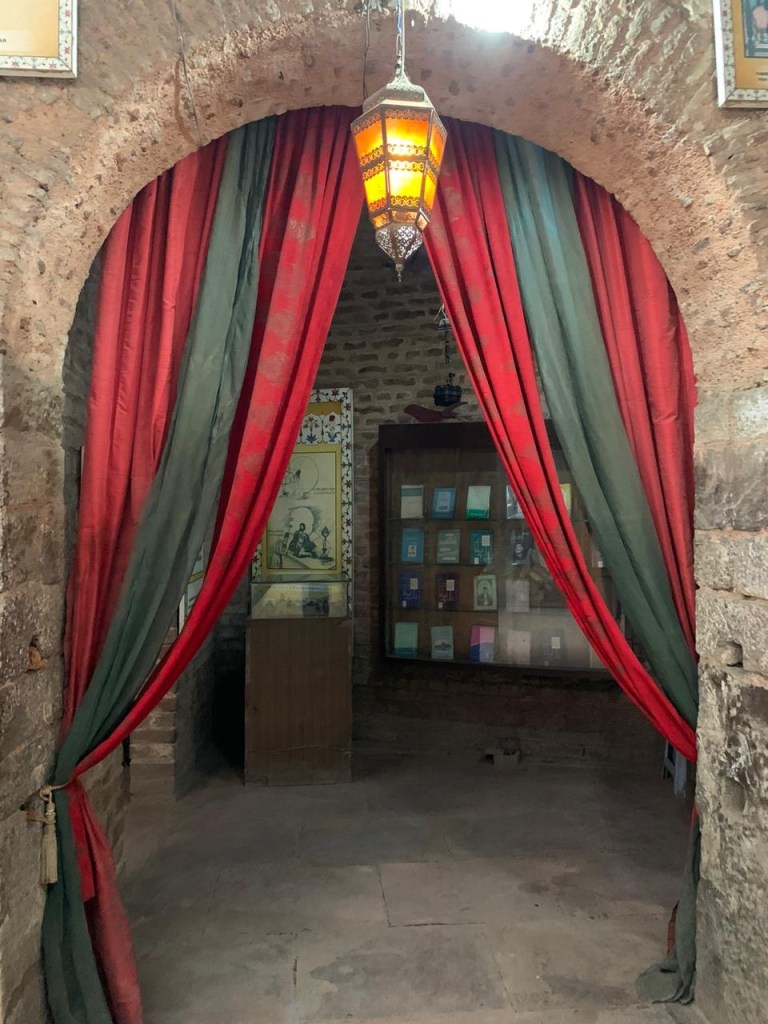
In the first look of the Haveli, the influence of the Mughal empire on the architecture can be sensed in the columns and the use of lakhori bricks in the entire structure. The open courtyard in the Haveli and the doorless rooms veiled by magnificent curtains transcend one back 150 years to when Ghalib had lived there. The walls of the mansion are adorned with old lamps and Urdu & Persian couplets written by Ghalib and capture the rich and varied culture of poetry in Delhi’s history.
In spite of spending most of his life in the city of Agra, Ghalib always considered the narrow lanes of Chandni chowk his original home. He expressed his fondness for Delhi in the following couplet.
“Ik roz apni rooh se poocha, ki dilli kya hai, to yun jawab main keh gaye, yeh duniya mano jism hai aur dilli uski jaan”
which translates to “ I asked my soul, ‘What is Delhi? She replied : ‘The world is the body, Delhi its soul”
The Haveli in general gives the old world charm and pieces of 19th-century realm lay wide open in the air surrounding the street filled with tea vendors, local jalebi shops and a variety of other products like meat, jewellery, Persian Ittar etc.
Till many years after his death, these shops were an integral part of the Haveli itself but in 1999, after the government’s order, a small part of the Haveli was converted into a museum.
However, the place is quite small and before we knew it, it got over, yet, there’s a part of the whole experience that lingered along with us long after we had left the mansion.
That’s what reading Ghalib’s poetry and eating sizzling hot jalebis in the midst of all the hustle Chandni Chowk has to offer does.
There is however one thing we decided that we would have without which our visit wouldn’t have been completed and that was the famous ‘Black Halwa’ from Haneef’s Mithai Shop which is right around the edge of Ballimaran.
The Halwa is made from buffalo milk and the black mass is reduced from it when it’s put to boiling for almost eight hours.
The potent fragrance of ghee from this Halwa filled the air with a sweet smell and it was definitely one of the tastiest dishes we ever had.
We read about Ghalib and the history of the Haveli before we went and thus we were aware how special ‘Dilli’ was to Ghalib and that’s why this Haveli is more than just an informative heritage site, it’s a momentous part of the history of Delhi and a passageway to what the crumbling life of the poet had once been like.
Written by- Kashvi Chandok
Representing
Siya Singh
Arshiya mahajan
Kangana Agarwal
Yashve Singh
 Rediscovering Delhi